2017年11月8日星期三

油价贵 苏梅岛计程车拟上调车资

油价贵 苏梅岛计程车拟上调车资


素叻他尼府苏梅岛计程车协会向当地相关部门承诺,在搭载乘客时司机愿意使用计程表,但希望将计费标准调整为前2公里100铢,之后每公里收20铢,堵车情况每分钟收5铢,因为苏梅岛上的油价比其他地方贵。

苏梅岛旅游警署署长比亚攀昨天(7日)透露,苏梅岛旅游警察指挥官命令苏梅岛旅游警署赶紧解决计程车司机载客不打表问题,因为曾多次接到游客投诉,称计程车司机收费过高,旅游警署展开调查后发现该情况属实,如果长期放任不管,会严重影响苏梅岛的旅游形象。旅游警署为解决该问题,与素叻他尼府运输办事处、苏梅岛警署以及计程车业者代表开会讨论解决办法。

苏梅岛计程车协会在会议上总结,苏梅岛地区比较特殊,投资成本比其他地区高,特别是油价每升高出2-3铢,如果用计程表计价一定会亏本。因此提议将计程车收费标准调整为前2公里收100铢,之后每公里收20铢,如果堵车计程车无法移动,则每分钟收5铢。

如果当地相关部门接受以上提议,苏梅岛计程车协会将组织计程车司机调整收费标准,尽快在本月23日完成并展开试行工作。如果各相关部门通过上述提议,则提交给政府部门审核。如果公布采用新收费标准后还有计程车司机不打表,则按照法律处理,避免影响当地旅游形象。

版权声明:本文版权属于《泰国世界日报》

2017年11月1日星期三

A Scrumptious blend of street food and tourism

A Scrumptious blend of street food and tourism


Food stalls and menus are undergoing a makeover in Chinatown and on Khao San Road, as city hall and TAT come together to attract more foreign and thai visitors alike

Bangkok is one of the best cities in the world for mouth-watering street food – as one US news network proclaimed recently.

This goes a long way in helping tourism, and authorities here are spicing up the appeal of Thai food by incorporating gastronomy into the Kingdom’s national tourism policy starting this October.

Indeed, plans are brewing to lead countrywide tourism promotion activities with food. Chinatown and Khao San Road are the most popular foodie destinations among foreign visitors.

On the surface, street fare may look affordable and innocuous, just like somtam and pad thai. In reality, it’s a gritty world of questionable food hygiene and overpriced seafood that’s populated by not just sidewalk vendors but slick money-laundering mafia bosses as well. Of course, vendors do know how to cook clean street food, yet many just don’t.

But that is changing. Authorities reckon it’s time such food is given a complete image makeover. This comes amid a set of stricter regulations being introduced by the Bangkok Metropo-litan Administration (BMA) that will change the face of street fare. That means ensuring the presence of street food in Bangkok’s tourism drive but in a better, regulated way.

“I have mentioned to several media outlets that it’s virtually impossible to do away with street food in Bangkok,” Vallop Suwandee told The Nation during an exclusive interview.

Vallop, chairman of the advisers to the governor of Bangkok, sees such food as not only a source of livelihood for the poor but also a tourist attraction. “We care about the poor quite a lot. But by caring, please do not equate this with the inconvenience caused to pedestrians. They have to be concerned about the convenience to pedestrians too,” he says.

Enjoying the flavour

In terms of tourism, Vallop says it’s the BMA’s duty to untiringly promote street food among Thais and foreign visitors to Bangkok “so they can enjoy the flavour and charm of street food in Thailand. The prime minister and the Bangkok governor appreciate the fact that CNN recognises our street food. The PM himself has instructed the BMA to make the charm of street food in Bangkok sustainable. We will not limit street food just to Chinatown and Khao San Road,” he states.

Vallop believes street food needs to be more sanitary, tasty, affordable – and not obstructive to pedestrians or road traffic. He is consulting Bangkok’s administrative laws and colleagues at the Public Health Department to make the two strips – BMA’s pilot scheme – fair to sidewalk vendors, pedestrians, diners and motorists. But that comes with meticulous regulations.

The move to regulate street food is being taken as a direct result of the BMA’s existing administrative law and complaints (through postcards and BMA’s hotline 1555) about food sanitation, pricing and pavement “congestion”.


Sanitation

A lack of sanitation is a major worry.

Vendors who cook food with their bare hands, wearing no gloves, aprons, or hats, grab the money from customers, then get back to cooking again. Many wash the dishes on the pavement, throw the day’s food waste into open sewers, or dump waste on the street without second thoughts. Regarding cooking, cheap palm oil is commonly used for dishes from fish cakes to gaprao gai.

The health-conscious would be easily put off by the levels of saturated fats in cheap cooking oils. Inky, for example, often goes to Yaowarat and Phetchaburi Soi 5 for street food and is alarmed by the lack of sanitation. “I think I like street food in Bangkok because it’s cheap and tasty.

But sometimes it’s hard to find parking, and I would like street food more if they improved on sanitation,” she says. Vallop admits food hygiene is not so good among sidewalk food stalls.

“We have to admit that the BMA has limited personnel, what with Bangkok’s total area of 1,574 square kilometres. It’s so vast. Still, we cannot deny this responsibility though there’s not enough personnel to supervise the sanitation of street food. In my opinion, maybe in the future, the city needs to outsource supervising powers to compensate for the shortages.

We have received complaints from the public that vendors just disregard or throw food leftovers into the drainage system of Yaowarat,” he says. Vallop explains that the sanitation strategy – devised a long time ago – involves personnel from the Public Health Department supervising all types of vendors, from fresh-produce markets to sidewalk food stalls.

“For example, the ingredients have to meet our sanitation standards. Moreover, the food on sale must not be contaminated and needs to follow our standards of freshness and no contamination,” he asserts.


Overcharging

Overcharging is also among the BMA’s concerns. “We have to admit that some of the street food vendors – especially those running seafood stalls – particularly in Chinatown overcharge their customers. Yes, we have received complaints from foreign and Thai visitors alike. Overcharging exists in general, but Chinatown is a place many would like to visit. So we are also going to bring order there and make it fair to the customer,” he says.

Vallop adds that the BMA is working with the Commerce Ministry to regulate food prices by taking Or Tor Kor Market’s pricing system as a benchmark. Vendors have to come up with a menu and a price list that can be seen clearly, Vallop says.

The cost of pad thai, for example, varies in Chinatown. “It depends on whether pad thai comes with seafood, or without meat. Normally pad thai without any meat should cost around Bt50. That’s the best price for street food. If you have shrimp, seafood or squid, it could cost more.

“Seafood is sold by weight. This is a matter for the Commerce Ministry that will compare food prices at Chinatown with those of Or Tor Kor. They have references. Some vendors charge exorbitant prices for other dishes too.

That’s why the ministry will step in,” he promises.Mafia Another major issue to be tackled is the local mafia pulling the strings behind street food stalls and shophouses in Bangkok. Vallop admits that if the BMA doesn’t step in to regulate street food, influential people – in other words, the local mafia – will.

“They [the mafia] have already stepped in,” he says, adding, “we have the names of all vendors, and according to our intelligence, we know who they [the influential people] are.

Some are vendors, but most of them are not. I am not saying that it’s Yaowarat alone, it’s all over Bangkok. In the past, we had this at Siam Square, Klong Thom, Silom and even on Sukhumvit Road.

What they do is rent out their spaces to vendors for storage. Right now, our governor is trying to clean up the house. All those who stray from the rules will be punished. A lot of city police have been transferred, moved, or dismissed from their positions.

In Chinatown, all those influential people should sacrifice themselves for what they have already earned. “They occupy maybe 10 slots of the pavement. And you have three factories, that means you have 30 slots occupied by individual vendors who act like nominees of these factories.

These factories just use the slots of the vendors as outlets for their products without paying tax or rent, and also cause inconvenience to the public. The public should be kept informed about all this,” he says.

All said, is Vallop afraid of the mafia? “I think everyone at city hall is working in good faith, serving the public. We have requested all those behind the scenes to be aware that we are serving the public. Everyone should respect the law. They should sacrifice themselves for the sake and benefit of the public. I think they know this.

Some people in certain areas, especially in the centre of Bangkok, are being closely watched by the anti-money laundering commission right now.

They are looking into their accounts and some figures are unexplainable,” he reveals.


Training vendors

The strict regulations are already being implemented. Vallop says the BMA is organising an orientation course in cooking – from food preparation to food safety and hygiene targeting sidewalk vendors.

“The BMA calls upon all food vendors [in Chinatown] to take the two-day orientation course no matter how many years they have been in the food business. The orientation course being held in conjunction with the Public Health Ministry will provide instructions on food preparation and the proper condition of ingredients, among other things. What fish sauce can they use, for example.

They just can’t use any ingredients or condiments. We will also train them on how to clean their hands appropriately, clean dishes, or operate in case they get the flu. The training is necessary because we won’t allow dish washing on the pavement anymore,” he pledges.

The two-day orientation course consists of a pre-test and a final test. If they don’t pass the final test, they won’t be allowed to go back to their business. Those who have passed the test will be issued an ID card with their photo and a barcode.

Things are indeed changing on the ground. Vallop says the vendors are moving their stalls to the outer edge of the pavement in Yaowarat so that pedestrians can walk along the space near the shophouses.

The left lane of four-laned Yaowarat Road is also reserved for pedestrians after 6pm. The owner of a noodle stall in Chinatown confirms new regulations are now being implemented. She has to move her stall from the middle of the subsoil to the outer edge. “Yes, new regulations have come into effect. We can’t put chairs in the middle of the soi anymore.

Stalls can be set up from 6pm only. I have to pay Bt500 to municipal police and another Bt500 to city police for the space,” she says. Another vendor who sells tube noodles stuffed with cabbage, bamboo shoots, pork and chicken says she has to wear both an apron and a hat as part of the regulations.

“Previously I wore only an apron, but not a hat. I pay rent of Bt1,000 a month and for operating on the pavement. You get fined Bt2,000 if you set up chairs on the street. You can sell food on the pavement only,” she says.

Vallop declares regulations for street food will be fully enforced towards the end of the year. With improvements to the street food scene, the goal is not to restrict promotion of street food to just the two foodie neighbourhoods but to highlight street food in Bangkok in its entirety as part of the national tourism plan.

The BMA is working with the Tourism Authority of Thailand (TAT) to maximise the impact of food on tourism. BMA and TAT officials are discussing ways to promote street food in Chinatown, Khao San and other areas. “We will go into details such as how to make Yaowarat food stalls remain free from uniformity of stall design.

TAT would like Yaowarat and Khao San to retain their own identity, not to make stalls look the same,” Vallop says. Vallop’s vision of Bangkok street food is influenced by his overseas travels.

To him, the countries in Asia that have the best street food management include Singapore and Japan. “I think people in Singapore are so disciplined and concerned about the public and not so ‘individualistic’. They don’t act according to their own whims. It all comes down to public awareness.

Everyone should be aware that it is their duty to respect the law.”


Gastronomy tourism

Eating is driving tourism these days, says Chattan Kunjara Na Ayudhya, deputy governor for Marketing Communications at TAT. Food is part of TAT’s grand scheme of gastronomy tourism. Street food is a segment that won’t be promoted on its own but as part of Thailand’s gastronomy tourism.

“In Thailand you can dine at several places – from street food stalls to resorts and restaurants. Street food is an important dimension that helps tourists learn about Thainess,” Chattan points out.

Chattan insists Thailand is ready to tap into gastronomy tourism given the dramatic increase in food-related spending by foreign visitors.

“We have learned that over the past three years, the main reason for coming to Thailand has been food, then it’s shopping and Thai hospitality. Food has become the No 1 reason for three years in a row. It’s clear spending on food is on the increase every year. Thailand is ready to push gastronomy tourism.

We have lots of high-quality restaurants where our chefs’ skills are recognised widely,” says Chattan. “We will have marketing promotions using food as the main thrust. For example, in Phuket, they will have to try seafood.

If we are promoting Chiang Mai, food – for example khao soi – will be used to promote the destination. For Ayutthaya, you need to try grilled river prawns.

There are many ways that food can add up to tourism strategy,” he says.‘Wide choice’ As for the capital, Chattan says food is one of Bangkok’s enduring charms. It’s a city where one can eat around the clock with a wide choice of not just Thai food but Japanese, French, Italian, Indian cuisine and more.

“I agree with the BMA for starting with Chinatown and Khao San as a pilot project. Doing this across the board is difficult. Later, we can carry out the project in other places. Thai-land is well recognised by tourists. But there are ‘a million shades of Thailand’.

So, open up to the new shade!” Vallop reckons street food not only tastes good but should also be integrated with our renowned Thai hospitality and ‘Thai smile’. “Vendors need to keep in mind that they are not just presenting Thailand to visitors.

They need to be aware that visitors will go back to their countries and help us promote the charms and taste of street food and Thai food to their friends and families. “On behalf of my governor and city hall, we would like to express our appreciation to visitors for coming to taste street food in Bangkok.

I hope they will have lingering memories of their experiences here so they can convey these pleasant experiences to their friends. In this way, we can get more visitors coming to Bangkok. I would also like visitors to understand that city hall cares about cleanliness and food hygiene,” Vallop says.

~Courtesy of The Nation~

2017年10月31日星期二

泰国湾风浪强 苏梅岛吁游客安全第一

泰国湾风浪强 苏梅岛吁游客安全第一


素叻他尼府(Surat Thani)素苏梅岛(Koh Samui)码头办事处提醒客船业者,出海时要做好各项保护游客安全的措施。气象台天气预报提醒,泰国湾风力强劲,海浪变凶猛,小型船只禁出海。指船只业者要及时关注气象台天气预报的消息,以及苏梅岛码头办事处发布的通知。

苏梅岛地区码头办事处负责人阁里叻,于昨天(31日)前往苏梅岛县码头检查码头客船的安全防范措施,这些船只包括有从其他地方抵达苏梅岛、帕岸岛和龟岛的船只。他说,据气象台天气预报通知,近期在泰国湾出海的客船要特别注意各项安全保护措施,因泰国湾的风力渐加强,离岸浪高大约2-3米,为此提醒各客船业者在行船中要特别注意保护乘客的生命安全。

阁里叻指出,苏梅岛码头办事处已以书面形式,通知苏梅岛县各个客船业者要做好各项载客安全防范措施,让客船业者检查船上的安全设备,例如救生衣和各种出行安全防范工具。此外,客船业者包括大型客船、小型客船、汽艇等也要及时关注气象台预报。出海时,船只业者要向苏梅岛码头办事处登记或报告。至于小渔船在这期间禁止出海。

另外,客船船长在将游客载送到泰国湾的各岛屿时,出行时要特别注意保护乘客的生命安全问题,及时提醒乘客穿好救生衣。此外,客船入港时也一样,等船只停稳后再让乘客下船。无论如何,不​​管是客船出行还是客船抵达码头,客船业者都要以保护乘客的生命安全为第一要务。

此外,为了树立游客出行旅游苏梅岛、帕岸岛和龟岛的安全信心,昨天(31日)起至本月3日,客船业者都要为游客做好搭船出海的各项安全防范措施。

《泰国世界日报》

最具特色水灯评比 将亮相素可泰

最具特色水灯评比 将亮相素可泰


素可泰府(Sukothai)府尹披帕昨天(31日)表示,欢迎广大游客于11月1-5日到素可泰国家历史公园参加水灯节活动,届时将举办以诗琳通公主殿下名义开展的最具特色水灯评比。今年水灯节期间的流动资金估计可达到5-7亿铢。

披帕表示,今年素可泰府水灯节庆祝活动在11月1-5日期间在素可泰府国家历史公园举行,活动主题为「共同缅怀先王」,活动包括放水灯、各类水灯巡游、孔明灯巡游等,同时于1日举办祭拜素可泰历届国王活动,于3日举办以诗琳通公主殿下名义开展的水灯评比活动。

披帕还表示,水灯节活动期间还将举办「从第九世王到第十世王,泰国皇室传承展览活动」,素可泰府古集市黎明布施斋僧活动、各类历史古典局表演、夜间篝火演出活动,以及共同参加放水灯活动等。估计整个活动期间将吸引超过10万人参加,为素可泰府带来5-7亿铢的流动资金。

《泰国世界日报》

2017年10月27日星期五

下月起开放至凌晨2时 马泰关卡增60官员

下月起开放至凌晨2时 马泰关卡增60官员


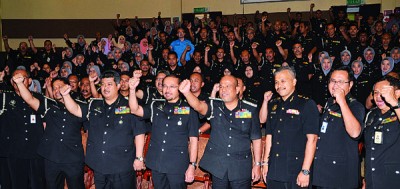
移民局全国总监拿督斯里慕斯达法(左4)带领北马各州移民厅官员誓言反贪,左2为吉打州局长祖海尔,右3为反贪会副局长苏威。

吉北黑木山马泰边境关卡将在11月1日起开放至凌晨2时,而首相纳吉将在当天亲临巡视。

移民局全国总监拿督斯里慕斯达法证实这项消息时说,黑木山关卡的开放时间将从原本的18小时增加至20小时。为了配合时间的延长需要更多人手轮班,黑木山关卡获批准增加60名移民厅官员。

2019年24小时开放

他是周二上午在米都出席一项北马区移民局尽忠职守集会及宣誓反贪仪式后向在场媒体透露,黑木山关卡也将在2019年1月1日全面开放24小时,而移民局已经作好准备接受新的挑战,尤其采用先进的生物辨识数码技术在制止非法入境方面全力以赴。


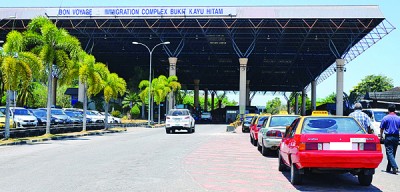
吉北黑木山边境关卡将在11月1日起开放至凌晨2时(档案照)。

~以上新闻转自光华日报~

马泰边境关税大厦升级 料2019年6月竣工

马泰边境关税大厦升级 料2019年6月竣工


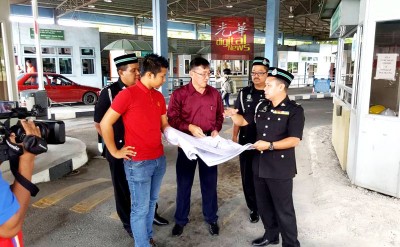
许福光(中)与鲁斯里(右1)讨论提升工程的图测。左为丹尼尔。

马泰边境玻璃市州巴东勿刹移民、关税、检疫及安全(ICQS)大厦正在进行提升工程,预计于2019年6月全面竣工,解决出入境及通关阻塞问题。

玻州移民局代主任鲁斯里说,提升工程从今年6月开始阶段性地进行,第一阶段将在半年之后完成,全面工程则预计于2019年6月完成。

他说,巴东勿刹关卡开放出入境的时间是清晨6时至晚上10时。

他说,随着提升工程展开,各执法单位已做好准备,有秩序地检查民众出入境通关的工作。


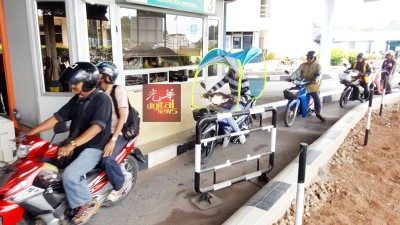
一辆从大马离境返回泰国的摩托车骑士,在摩托车上安装挡雨和防晒的小帐蓬。

最早或2019年初完工

工程承包商Perniagaan Usahakita私人有限公司的场地技术人员丹尼尔说,工程预计于2019年6月完成,若一切顺利,可能提早至年初1月便完工。

他说,这项工程包括兴建一座两层楼新建筑物、提升现有的移民局大厦的设施、提升通关柜台、增加通关通道至5条、更换建筑物的新屋顶等。

他指出,汽车的通关通道将从原本2条,增至3条,其余两条分别是巴士及摩托。

他说,罗里的通关通道将移至附近的渔业发展局大厦。


巴东勿刹入境泰国的关卡通道(左边)经常阻塞,反观从泰国入境巴东勿刹的关卡通道(右边)则十分顺畅。

许福光提醒民众耐心等待

马华知知丁宜州议员许福光提醒使用巴东勿刹关卡入境泰国的民众,耐心等待工程完成,届时就不会再面对交通阻塞的问题。

他也呼吁民众遵守交通规则,顺序排队及避免超车,以免造成不必要的情况发生,而加剧阻塞。

针对此事,许福光希望当局能在摩托车通道安装屋顶,尤其是阻塞问题发生时,排在外面队伍的摩托车骑士被迫晒太阳或淋雨。

~以上新闻转自光华日报~

2017年10月14日星期六

Asean to open skies further

Asean to open skies further

Asean countries signed the protocol to put into place a package of commitments to further liberalise air transport services in the region.

At the 23rd Asean Transport Ministers Meeting, the countries also agreed to improve connectivity among member states.

Transport ministers and senior officials from Asean member countries attended the two-day meeting. Also present were dialogue partners from China, Japan and South Korea.

Among the highlights of the meeting was the conclusion of the “tenth package of commitments on air transport services under the Asean Framework of Services”.

Liow said the ministers also signed the protocol of domestic code-share rights, allowing code­-sharing arrangements between the marketing airline and domestic airline in Asean member countries.

“This would increase connectivity between Malaysia and other Asean member states.

“At the same time, it would enable designated airlines of Malaysia to offer their passengers a wide range of travel options which can extend beyond the airlines’ own network and route structure,” he added.

Liow said the ministers signed the Mutual Recognition Arrangement on Flight Crew Licensing, which would facilitate air services to complement liberalisation efforts in Asean, and ensure the highest degree of security in international air transport.

They also reached an agreement on the Facilitation of Cross Border Transport of Passengers by Road Vehicles.

“This is to promote seamless cross-border mobility of passengers between Asean member states,” said Liow.

He added that the ministers had concluded the Memorandum of Understanding (MoU) between the authorities in charge of aircraft accident investigation under the Asean-China partnership.

“This agreement would further strengthen Malaysia’s cooperation with China in relation to aircraft accident and incident investigations, sharing experiences and expertise in various specialist fields, equipment and research,” he said.

~News courtesy of The Star~