Coronavirus: Thailand requires Chinese tourists to show medical certificates
Thailand said all arriving Chinese tourists must provide medical certificates stating that they are healthy and free of infection from the novel coronavirus.
This measure is being implemented in the wake of the World Health Organisation's decision to call the virus outbreak a global health emergency, the government said in a release dated Feb 1.
Chinese visitors spent almost US$18 billion (S$24.5 billion) in Thailand last year, more than a quarter of all foreign-tourism receipts.
With China banning outbound group tours to fight the virus, Thailand's tourism industry - which makes up about 21 per cent of the economy - is taking a severe knock.
Reduced travel from China alone could result in 50 billion baht (S$2 billion) of lost tourism revenue, the Thai Tourism Ministry estimated.
The spread of the coronavirus beyond China has also affected domestic tourism in Thailand, which has recorded more infections than anywhere but China with 19 cases. Thailand announced its first case of human-to-human transmission on Jan 31.
Shopkeepers in Phuket said that had left Thai tourists wary of venturing out to join what should have been an annual festival on Walking Street in the heart of the town.
~The Straits Times~

2019年12月1日星期日
Thailand Considers Double Visa, 24-Hr Nong Khai Checkpoint
Thailand Considers Double Visa, 24-Hr Nong Khai Checkpoint
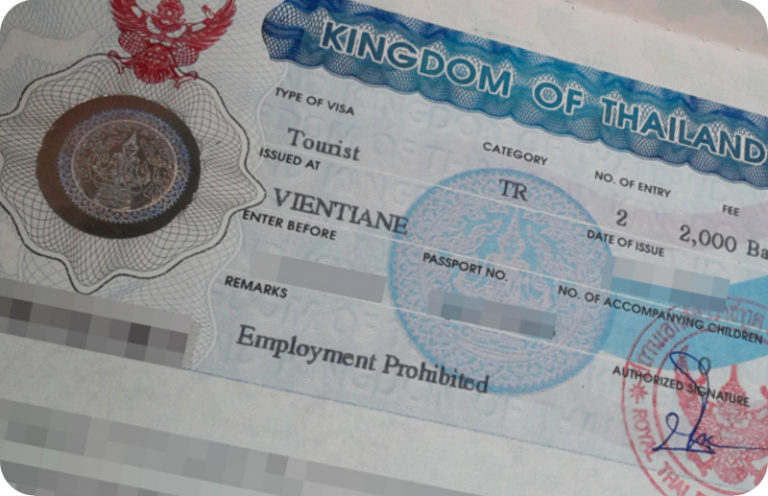
According to reports in the Thai media, the Kingdom of Thailand is set to introduce a double visa, allowing visitors to exit the country and re-enter, and may open the Nong Khai checkpoint 24-hours.
The news comes after Thailand began enforcing strict new visa policies in 2016, allowing foreigners of many nations only two entries by land per year.
The 2016 policy change deeply affected expatriates living in Laos, many of whom had previously traveled to Thailand for leisure or for medical reasons on a weekly or daily basis.
A report in The Thaiger today quotes Deputy Secretary-General to the Thai PM, Kobsak Pootrakul, as saying a double-entry tourism visa will be introduced. The new visa will allow visitors to enter, leave, and then re-enter Thailand during their stay in the Kingdom.
According to other reports, Mr. Kobsak has even said that a multiple entry visa may be considered in the future.
Thailand hopes to bring 42 million visitors to Thailand in 2020, after various factors, including an ultra-strong baht, have slowed tourism in the land of smiles.
The new double visa could help the country see more visits from expatriates in neighboring countries, including Laos, and entice tourists to re-enter Thailand after visiting other countries.
24-Hour Visa Checkpoint at Nong Khai
Reports from Thai media are also stating that the border checkpoint at Nong Khai could be set to open 24-hours.
The new hours would be trialed for three months, and if successful would continue. So far, no official statement has been made by Lao authorities in regard to 24-hour operations at the border.
~Laotian Times~
According to reports in the Thai media, the Kingdom of Thailand is set to introduce a double visa, allowing visitors to exit the country and re-enter, and may open the Nong Khai checkpoint 24-hours.
The news comes after Thailand began enforcing strict new visa policies in 2016, allowing foreigners of many nations only two entries by land per year.
The 2016 policy change deeply affected expatriates living in Laos, many of whom had previously traveled to Thailand for leisure or for medical reasons on a weekly or daily basis.
A report in The Thaiger today quotes Deputy Secretary-General to the Thai PM, Kobsak Pootrakul, as saying a double-entry tourism visa will be introduced. The new visa will allow visitors to enter, leave, and then re-enter Thailand during their stay in the Kingdom.
According to other reports, Mr. Kobsak has even said that a multiple entry visa may be considered in the future.
Thailand hopes to bring 42 million visitors to Thailand in 2020, after various factors, including an ultra-strong baht, have slowed tourism in the land of smiles.
The new double visa could help the country see more visits from expatriates in neighboring countries, including Laos, and entice tourists to re-enter Thailand after visiting other countries.
24-Hour Visa Checkpoint at Nong Khai
Reports from Thai media are also stating that the border checkpoint at Nong Khai could be set to open 24-hours.
The new hours would be trialed for three months, and if successful would continue. So far, no official statement has been made by Lao authorities in regard to 24-hour operations at the border.
~Laotian Times~
2019年11月21日星期四
Malaysia-Thai border trial extended
Malaysia-Thai border trial extended

New gateway: The newly-built CIQ checkpoint in Sadao will be open 24 hours for cargo traffic travelling between Malaysia and Thailand.
KUALA LUMPUR: The Bukit Kayu Hitam-Sadao Customs, Immigration and Quarantine (CIQ) checkpoint will operate round-the-clock well into 2020 with Malaysia and Thailand extending the three-month trial period.
The checkpoint, which opened for 24 hours to cargo traffic on June 17, will remain so until June next year to prolong the trial period to one year.
“This will be a boon to businesses and cargo transport operators on both sides of the border,” said Thai Ambassador to Malaysia Narong Sasitorn.
“We have observed more trucks coming into Thailand from Malaysia during the extended hours.
“From the Thai side there has not been a significant increase, so we need to create more awareness,” he said in an interview.
Both governments had decided earlier to open the checkpoint for 24 hours for three months from April 1, but the move was delayed as the Thais wanted more time to prepare.
Border connectivity was key on the agenda when Prime Minister Tun Dr Mahathir Mohamad met his Thai counterpart Gen Prayut Chan-o-cha for talks in Bangkok last October.
Following the prime ministerial initiative, both foreign ministers met in the Thai capital in January to reach an agreement to open the border for 24 hours, from the previous 18-hour operation, on a three-month trial basis.
The extra hours are aimed at reducing congestion at the border where there are bottlenecks during rush hour.
Narong said promoting seamless border connectivity remained a top priority to enable businesses on both sides to have complete flexibility to pick the right time to transport their goods and ensure more cost-efficient logistics.
He said latest statistics showed that the number of trucks passing through the Sadao CIQ complex (both ways) was between 12,000 and 13,000 per month, but added that the utilisation of the extra hours was still very low.
During the extended operating hours at the Sadao checkpoint (11pm to 5am Thai time) in June, he said inbound cargo traffic from Bukit Kayu Hitam registered a 2.5% increase, followed by 0.67% (July), 0.56% (August), 0.16% (September) and 0.30% (October).
“The technical team is continuing to monitor the developments at the shared border.
“On my part, I have been in touch with the Songhkla vice-governor to spur things on,” the envoy added.
Narong said the new Sadao CIQ complex was near completion and scheduled to be operational by the first quarter of 2020.
He said a decision on the building of a new road alignment to link the US$78mil (RM315mil) complex with the Bukit Kayu Hitam Immigration, Customs, Quarantine and Security (ICQS) complex was still pending.
“We have presented two proposals to Malaysia, which has come up with its own suggestion. We need to finalise this to prepare for the opening of the Sadao complex.
“Without a new road alignment, we will have to rely on the existing route.
“But this will not resolve the congestion and bottleneck situation at peak hours with more lorries and trucks waiting to cross,” he said, adding that a single inspection facility for all trucks, now randomly inspected at least twice – once in Thailand and in Malaysia – was being explored.
Narong said he had also met Works Minister Baru Bian on the proposals to build a bridge to connect Takbai in Narathiwat to Pengkalan Kubor in Tumpat, Kelantan, and another linking Rantau Panjang, Pasir Mas, to Sungai Golok, also in Narathiwat.
He said the Takbai-Pengkalan Kubor bridge would span 270m and have four lanes.
“If the roads connecting both ends of the bridge are included, the total length of the project will be 10.6km.
“This bridge is long overdue. The economic benefits are indeed immense. Thailand had already proposed the engineering design some years back,” he said.
~The Star~
New gateway: The newly-built CIQ checkpoint in Sadao will be open 24 hours for cargo traffic travelling between Malaysia and Thailand.
KUALA LUMPUR: The Bukit Kayu Hitam-Sadao Customs, Immigration and Quarantine (CIQ) checkpoint will operate round-the-clock well into 2020 with Malaysia and Thailand extending the three-month trial period.
The checkpoint, which opened for 24 hours to cargo traffic on June 17, will remain so until June next year to prolong the trial period to one year.
“This will be a boon to businesses and cargo transport operators on both sides of the border,” said Thai Ambassador to Malaysia Narong Sasitorn.
“We have observed more trucks coming into Thailand from Malaysia during the extended hours.
“From the Thai side there has not been a significant increase, so we need to create more awareness,” he said in an interview.
Both governments had decided earlier to open the checkpoint for 24 hours for three months from April 1, but the move was delayed as the Thais wanted more time to prepare.
Border connectivity was key on the agenda when Prime Minister Tun Dr Mahathir Mohamad met his Thai counterpart Gen Prayut Chan-o-cha for talks in Bangkok last October.
Following the prime ministerial initiative, both foreign ministers met in the Thai capital in January to reach an agreement to open the border for 24 hours, from the previous 18-hour operation, on a three-month trial basis.
The extra hours are aimed at reducing congestion at the border where there are bottlenecks during rush hour.
Narong said promoting seamless border connectivity remained a top priority to enable businesses on both sides to have complete flexibility to pick the right time to transport their goods and ensure more cost-efficient logistics.
He said latest statistics showed that the number of trucks passing through the Sadao CIQ complex (both ways) was between 12,000 and 13,000 per month, but added that the utilisation of the extra hours was still very low.
During the extended operating hours at the Sadao checkpoint (11pm to 5am Thai time) in June, he said inbound cargo traffic from Bukit Kayu Hitam registered a 2.5% increase, followed by 0.67% (July), 0.56% (August), 0.16% (September) and 0.30% (October).
“The technical team is continuing to monitor the developments at the shared border.
“On my part, I have been in touch with the Songhkla vice-governor to spur things on,” the envoy added.
Narong said the new Sadao CIQ complex was near completion and scheduled to be operational by the first quarter of 2020.
He said a decision on the building of a new road alignment to link the US$78mil (RM315mil) complex with the Bukit Kayu Hitam Immigration, Customs, Quarantine and Security (ICQS) complex was still pending.
“We have presented two proposals to Malaysia, which has come up with its own suggestion. We need to finalise this to prepare for the opening of the Sadao complex.
“Without a new road alignment, we will have to rely on the existing route.
“But this will not resolve the congestion and bottleneck situation at peak hours with more lorries and trucks waiting to cross,” he said, adding that a single inspection facility for all trucks, now randomly inspected at least twice – once in Thailand and in Malaysia – was being explored.
Narong said he had also met Works Minister Baru Bian on the proposals to build a bridge to connect Takbai in Narathiwat to Pengkalan Kubor in Tumpat, Kelantan, and another linking Rantau Panjang, Pasir Mas, to Sungai Golok, also in Narathiwat.
He said the Takbai-Pengkalan Kubor bridge would span 270m and have four lanes.
“If the roads connecting both ends of the bridge are included, the total length of the project will be 10.6km.
“This bridge is long overdue. The economic benefits are indeed immense. Thailand had already proposed the engineering design some years back,” he said.
~The Star~
2019年11月11日星期一
Laos, Thailand To Build Another Friendship Bridge
Laos, Thailand To Build Another Friendship Bridge
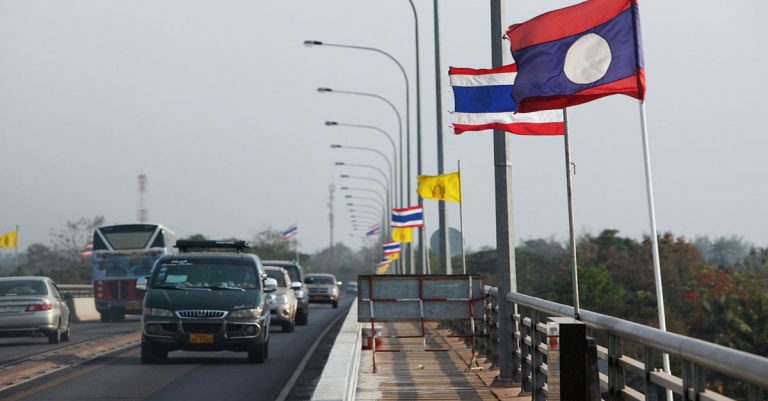
Laos and Thailand are considering the construction of one more friendship bridge to connect the two countries in a move that would link Vientiane Province and Loei.
The governor of Vientiane Province, Mr. Khamphan Sithidampha told reporters on August 16 that Vientiane provincial authorities had proposed the project to the government for its consideration.
“We are conducting a study on the location of the bridge, to decide whether it should be in Sanakham or Meun district,” Mr. Khamphan, as quoted by Vientiane Times.
It is unclear when the construction of the bridge would begin.
The first friendship bridge to connect the two nations was built in 1994, with help from the Australian government.
Since then, the two governments have constructed a total of four Lao-Thai bridges across the Mekong River and have signed an agreement to build another bridge linking Borikhamxay province with the Thai province of Bueng Kan.
Mr. Khamphan said the construction of the bridge and the upgrade of border crossings between Vientiane province and Loei Province would provide a significant boost for domestic and foreign investment.
Laos and Thailand have beefed up their efforts to improve connectivity between two nations in recent years.
The first freight train service to and from Laos was launched in early August, which will carry cargo from a container yard at Thanaleng Railway Station in Vientiane, Laos, to as far as the Laem Chaban seaport in Thailand.
Trains to and from Vientiane used to be only able to carry passengers only across the 3.5km track, while freight was carried across the border to Nong Khai by truck.
Meanwhile, Thailand is preparing to launch the country’s first bullet train that will run between Bangkok and Beijing, China, with Laos as one of the intermediate stations.
In particular, the first route, a Thai-Sino project linking Bangkok and Nong Khai in the far Northeast, is currently under construction and is scheduled to be completed by 2023.
In July, Laos and Thailand also signed an agreement to extend road and rail connections between the two countries worth more than THB 3 billion (USD 98.2 million).
Under the agreement, the two countries plan to improve the R11 road linking the Phudu border checkpoint in Uttaradit province in Northern Thailand with the Lao capital, Vientiane. The two-lane road will be paved with asphalt and will cost about THB 1.8 billion (USD 59 million).
~Laotian Times~
Laos and Thailand are considering the construction of one more friendship bridge to connect the two countries in a move that would link Vientiane Province and Loei.
The governor of Vientiane Province, Mr. Khamphan Sithidampha told reporters on August 16 that Vientiane provincial authorities had proposed the project to the government for its consideration.
“We are conducting a study on the location of the bridge, to decide whether it should be in Sanakham or Meun district,” Mr. Khamphan, as quoted by Vientiane Times.
It is unclear when the construction of the bridge would begin.
The first friendship bridge to connect the two nations was built in 1994, with help from the Australian government.
Since then, the two governments have constructed a total of four Lao-Thai bridges across the Mekong River and have signed an agreement to build another bridge linking Borikhamxay province with the Thai province of Bueng Kan.
Mr. Khamphan said the construction of the bridge and the upgrade of border crossings between Vientiane province and Loei Province would provide a significant boost for domestic and foreign investment.
Laos and Thailand have beefed up their efforts to improve connectivity between two nations in recent years.
The first freight train service to and from Laos was launched in early August, which will carry cargo from a container yard at Thanaleng Railway Station in Vientiane, Laos, to as far as the Laem Chaban seaport in Thailand.
Trains to and from Vientiane used to be only able to carry passengers only across the 3.5km track, while freight was carried across the border to Nong Khai by truck.
Meanwhile, Thailand is preparing to launch the country’s first bullet train that will run between Bangkok and Beijing, China, with Laos as one of the intermediate stations.
In particular, the first route, a Thai-Sino project linking Bangkok and Nong Khai in the far Northeast, is currently under construction and is scheduled to be completed by 2023.
In July, Laos and Thailand also signed an agreement to extend road and rail connections between the two countries worth more than THB 3 billion (USD 98.2 million).
Under the agreement, the two countries plan to improve the R11 road linking the Phudu border checkpoint in Uttaradit province in Northern Thailand with the Lao capital, Vientiane. The two-lane road will be paved with asphalt and will cost about THB 1.8 billion (USD 59 million).
~Laotian Times~
2019年8月5日星期一
Tourism Langkawi, Malindo Air to launch promotion to lure tourists from Phuket
Tourism Langkawi, Malindo Air to launch promotion to lure tourists from Phuket
Tourism Langkawi, a local tourism development organisation, in collaboration with Malindo Air, will launch a promotion to introduce tourism products and hotel accommodation offered by its members, to lure tourists from Phuket to the island, next month.
Langkawi Tourism president Ahmad Phisol Ishak said Malindo Air’s Langkawi-Phuket-Langkawi direct flights had opened up a huge opportunity for the island’s tourism sector as it would ease the travel of visitors.
“Fifteen members of Langkawi Tourism comprising travel agents, hotel and tourism product operators are joining forces with Malindo Air to launch the promotion at Langkawi International Airport on Sept 2.
“We want to take this opportunity to attract more tourists from Phuket. During the launching ceremony, representatives from 10 travel agents and three media organisations in Thailand will also be flown in as part of the promotion.”
He said this when met after chairing a meeting with Malindo Air's North and Central Malaysia manager Arasu Soundarajan and members of Tourism Langkawi at Ombak Villa Langkawi here today.
Ahmad Phisol said the promotion was also being held as a result of positive feedback received by the organisation following the Tourism Langkawi products engagement mission in Phuket from July 19-22.
“The mission was very successful, Tourism Langkawi with Malindo Air received positive feedback on what we were able to offer as a result of the meeting with 25 travel agents there. Furthermore, we see Phuket as an attraction not only for Thai tourists but also from Europe and China,“ he said.
Meanwhile, Arasu Soundarajan said the airlines hoped the cooperation and the promotion would increase the number of passengers on its Langkawi-Phuket-Langkawi sector.
“We hope to push our load through this collaboration with the marketing support from Tourism Langkawi. Through this campaign, we can offer special fares to travel agents offering hotel packages,” he said.
Malindo Air has been offering flights for the Langkawi-Phuket-Langkawi sector every Monday, Wednesday and Friday since March.
-- BERNAMA
Tourism Langkawi, a local tourism development organisation, in collaboration with Malindo Air, will launch a promotion to introduce tourism products and hotel accommodation offered by its members, to lure tourists from Phuket to the island, next month.
Langkawi Tourism president Ahmad Phisol Ishak said Malindo Air’s Langkawi-Phuket-Langkawi direct flights had opened up a huge opportunity for the island’s tourism sector as it would ease the travel of visitors.
“Fifteen members of Langkawi Tourism comprising travel agents, hotel and tourism product operators are joining forces with Malindo Air to launch the promotion at Langkawi International Airport on Sept 2.
“We want to take this opportunity to attract more tourists from Phuket. During the launching ceremony, representatives from 10 travel agents and three media organisations in Thailand will also be flown in as part of the promotion.”
He said this when met after chairing a meeting with Malindo Air's North and Central Malaysia manager Arasu Soundarajan and members of Tourism Langkawi at Ombak Villa Langkawi here today.
Ahmad Phisol said the promotion was also being held as a result of positive feedback received by the organisation following the Tourism Langkawi products engagement mission in Phuket from July 19-22.
“The mission was very successful, Tourism Langkawi with Malindo Air received positive feedback on what we were able to offer as a result of the meeting with 25 travel agents there. Furthermore, we see Phuket as an attraction not only for Thai tourists but also from Europe and China,“ he said.
Meanwhile, Arasu Soundarajan said the airlines hoped the cooperation and the promotion would increase the number of passengers on its Langkawi-Phuket-Langkawi sector.
“We hope to push our load through this collaboration with the marketing support from Tourism Langkawi. Through this campaign, we can offer special fares to travel agents offering hotel packages,” he said.
Malindo Air has been offering flights for the Langkawi-Phuket-Langkawi sector every Monday, Wednesday and Friday since March.
-- BERNAMA
2019年7月1日星期一
Unesco geoparks may become one
Unesco geoparks may become one
Malaysia and Thailand may soon share the honour of caring for two 550-million-year-old assets joined as one.
The Langkawi Development Authority (Lada) will discuss with Satun province to merge the Unesco Global Geoparks (UGG) on both sides into one.
“As the first transnational UGG in Asia, tourists exploring this natural wonder will be able to move between Langkawi and Satun with the least hassle,” said Lada chief executive officer Dr Hezri Adnan.
He said he has passed this request to Unesco, adding that he will meet the Satun governor next month on the matter.
Langkawi won its UGG status in 2007 while Satun got it just last year.
Dr Hezri said both geoparks were actually formed at the same time, during a massive tectonic event that split apart the old supercontinent Pangea 550 million years ago.
Visitors can view one of the massive granitic boulders that was once a part of Pangea at the newly-opened Langkawi Garden of Rainbows and Butterflies near Telaga Harbour Park.
A single boulder measuring over 45m across was partly unearthed and is now a feature of the garden.
“Geologically speaking, the Satun and Langkawi geoparks are one and the same.
“Our lands share the same ancient history,” he added.
By merging, he said both sides will share the duties of conservation, managed development and promotion.
He said the cross-border attraction will significantly boost Langkawi’s tourism industry and that tourists from around the world will be able to immerse themselves in the natural wonders and cultures of both places with minimum immigration hassle.
Travel time by ferry between Langkawi and Satun geoparks are one and a half hours.
~News courtesy of The Star~
Malaysia and Thailand may soon share the honour of caring for two 550-million-year-old assets joined as one.
The Langkawi Development Authority (Lada) will discuss with Satun province to merge the Unesco Global Geoparks (UGG) on both sides into one.
“As the first transnational UGG in Asia, tourists exploring this natural wonder will be able to move between Langkawi and Satun with the least hassle,” said Lada chief executive officer Dr Hezri Adnan.
He said he has passed this request to Unesco, adding that he will meet the Satun governor next month on the matter.
Langkawi won its UGG status in 2007 while Satun got it just last year.
Dr Hezri said both geoparks were actually formed at the same time, during a massive tectonic event that split apart the old supercontinent Pangea 550 million years ago.
Visitors can view one of the massive granitic boulders that was once a part of Pangea at the newly-opened Langkawi Garden of Rainbows and Butterflies near Telaga Harbour Park.
A single boulder measuring over 45m across was partly unearthed and is now a feature of the garden.
“Geologically speaking, the Satun and Langkawi geoparks are one and the same.
“Our lands share the same ancient history,” he added.
By merging, he said both sides will share the duties of conservation, managed development and promotion.
He said the cross-border attraction will significantly boost Langkawi’s tourism industry and that tourists from around the world will be able to immerse themselves in the natural wonders and cultures of both places with minimum immigration hassle.
Travel time by ferry between Langkawi and Satun geoparks are one and a half hours.
~News courtesy of The Star~
2018年1月13日星期六
South East Asia in the grip of chilly weather
South East Asia in the grip of chilly weather
Temperatures across South-east Asia have dipped beyond the norm in recent days, with non-stop rain and strong winds contributing to chillier tropics.
The thermostat has dropped to as low as 22°C in Kuala Lumpur and Singapore and 17ºC in Bangkok, cold bouts have been reported in Cambodia, Vietnam, Indonesia and the Philippines, and ice slabs have even been found in parts of Myanmar.
The weather has become so chilly that Malaysian Prime Minister Datuk Seri Najib Tun Razak tweeted on Friday (Jan 12): "Wow, Malaysia's weather is really cold today, just like in Jeddah!" He had just returned from a trip to Saudi Arabia.
The Malaysian Meteorological Department attributed the chill to the north-east monsoon, but did not expect temperatures to dip further. The agency forecasts all-day rain to last until Sunday in Kuala Lumpur.
Thailand has been experiencing a cold snap since last month, with fog blanketing its northern regions and frost forming on mountains.
In Hanoi, the Vietnamese capital, the temperature fell to as low as 8ºC, the lowest this winter for the city.
Though Cambodia was also struck by the cold weather this week, it was not as bad as last month, when the temperature plunge caused a sweater-shopping frenzy, and baby elephants had to wear hand-knitted coats.
The Philippines has been experiencing generally colder weather too, a result of the El Nino-La Nina weather dynamics, and the chilling Arctic air called the polar vortex. "We have seen a cold blast in the Pacific and Atlantic regions," said the local weather bureau's forecaster Nikkos Penaranda. The lowest temperature recorded recently was 12.2ºC in the northern city of Baguio on Jan 1.
Meanwhile, Indonesia's Meteorology, Climatology and Geophysics Agency said it recorded moderately lower-than-usual temperatures in the Riau Islands, an Indonesian province closest to Singapore, and in Nusa Tenggara Timur, east of the country's main tourist island of Bali. On Friday, the two locations registered temperatures of 23ºC to 25ºC.
All other provinces are seeing relatively normal temperatures, state weather forecaster Risda Novikarani told The Straits Times.
Over in South Asia, the northern parts of India were also in the midst of a cold spell, but meteorological officials said this was well within the range for winter months. "Temperatures have fallen and the cold wave condition is more severe in January than December," said Mahesh Palawat, director of private weather forecaster Skymet. "It is a normal winter."
According to India's Meteorological Department, minimum temperatures in most parts of northern India this week continued to be between 5ºC and 10ºC, and would remain so until Monday (Jan 15).
~The Straits Times/Asia News Network~
Temperatures across South-east Asia have dipped beyond the norm in recent days, with non-stop rain and strong winds contributing to chillier tropics.
The thermostat has dropped to as low as 22°C in Kuala Lumpur and Singapore and 17ºC in Bangkok, cold bouts have been reported in Cambodia, Vietnam, Indonesia and the Philippines, and ice slabs have even been found in parts of Myanmar.
The weather has become so chilly that Malaysian Prime Minister Datuk Seri Najib Tun Razak tweeted on Friday (Jan 12): "Wow, Malaysia's weather is really cold today, just like in Jeddah!" He had just returned from a trip to Saudi Arabia.
The Malaysian Meteorological Department attributed the chill to the north-east monsoon, but did not expect temperatures to dip further. The agency forecasts all-day rain to last until Sunday in Kuala Lumpur.
Thailand has been experiencing a cold snap since last month, with fog blanketing its northern regions and frost forming on mountains.
In Hanoi, the Vietnamese capital, the temperature fell to as low as 8ºC, the lowest this winter for the city.
Though Cambodia was also struck by the cold weather this week, it was not as bad as last month, when the temperature plunge caused a sweater-shopping frenzy, and baby elephants had to wear hand-knitted coats.
The Philippines has been experiencing generally colder weather too, a result of the El Nino-La Nina weather dynamics, and the chilling Arctic air called the polar vortex. "We have seen a cold blast in the Pacific and Atlantic regions," said the local weather bureau's forecaster Nikkos Penaranda. The lowest temperature recorded recently was 12.2ºC in the northern city of Baguio on Jan 1.
Meanwhile, Indonesia's Meteorology, Climatology and Geophysics Agency said it recorded moderately lower-than-usual temperatures in the Riau Islands, an Indonesian province closest to Singapore, and in Nusa Tenggara Timur, east of the country's main tourist island of Bali. On Friday, the two locations registered temperatures of 23ºC to 25ºC.
All other provinces are seeing relatively normal temperatures, state weather forecaster Risda Novikarani told The Straits Times.
Over in South Asia, the northern parts of India were also in the midst of a cold spell, but meteorological officials said this was well within the range for winter months. "Temperatures have fallen and the cold wave condition is more severe in January than December," said Mahesh Palawat, director of private weather forecaster Skymet. "It is a normal winter."
According to India's Meteorological Department, minimum temperatures in most parts of northern India this week continued to be between 5ºC and 10ºC, and would remain so until Monday (Jan 15).
~The Straits Times/Asia News Network~
2018年1月12日星期五
A colourful and distinctive festival of umbrellas
A colourful and distinctive festival of umbrellas

Witness the beauty of Thai culture at the Bo Sang Umbrella and Sankampang Handicrafts Festival
The annual Bo Sang Umbrella and Sankampang Handicrafts Festival celebrates and recognises the community that creates Thailand’s most famous umbrellas handmade from saa, or mulberry bark, paper.
This year the event takes place from 19 to 21 January, 2018.Legend has it that a monk travelled to neighbouring Myanmar, where he came across unique umbrellas made from saa paper that offered protection against both the sun and rain.
He returned with the production technique and introduced the umbrella to the elders of Bo Sang village, who added their own artistic skills to create distinctive and colourful, but very practical, umbrellas.At first it was just a profitable hobby that supplemented the villagers’ earnings from the annual rice crop.
However, with time, production of the saa paper umbrellas prospered, prompting villagers to establish a handicraft cooperative in 1941 that now organises the annual Bo Sang Umbrella and Sankampaeng Handicrafts Festival.
To-date, Bo Sang umbrellas are made from three different materials, including saa paper, silk and cotton.During the three-day festival, streets are illuminated by lanterns, while hundreds of umbrellas are hung from the rafters and beams of houses and shops. Bands play, while villagers compete to design the year’s most attractive umbrella.
The ‘Bo Sang Beauty Pageant Bike Parade’ presents local ladies with an umbrella in one hand riding a bike with another. Concerts and a food festival compete for the attention of the audience, a mix of both tourists and residents, who gather to celebrate Bo Sang’s innovative handicraft skills.
~The Nation~

Witness the beauty of Thai culture at the Bo Sang Umbrella and Sankampang Handicrafts Festival
The annual Bo Sang Umbrella and Sankampang Handicrafts Festival celebrates and recognises the community that creates Thailand’s most famous umbrellas handmade from saa, or mulberry bark, paper.
This year the event takes place from 19 to 21 January, 2018.Legend has it that a monk travelled to neighbouring Myanmar, where he came across unique umbrellas made from saa paper that offered protection against both the sun and rain.
He returned with the production technique and introduced the umbrella to the elders of Bo Sang village, who added their own artistic skills to create distinctive and colourful, but very practical, umbrellas.At first it was just a profitable hobby that supplemented the villagers’ earnings from the annual rice crop.
However, with time, production of the saa paper umbrellas prospered, prompting villagers to establish a handicraft cooperative in 1941 that now organises the annual Bo Sang Umbrella and Sankampaeng Handicrafts Festival.
To-date, Bo Sang umbrellas are made from three different materials, including saa paper, silk and cotton.During the three-day festival, streets are illuminated by lanterns, while hundreds of umbrellas are hung from the rafters and beams of houses and shops. Bands play, while villagers compete to design the year’s most attractive umbrella.
The ‘Bo Sang Beauty Pageant Bike Parade’ presents local ladies with an umbrella in one hand riding a bike with another. Concerts and a food festival compete for the attention of the audience, a mix of both tourists and residents, who gather to celebrate Bo Sang’s innovative handicraft skills.
~The Nation~
2017年11月30日星期四
Delightful flower festival at Bangkok's Rama IX Park
Delightful flower festival at Bangkok's Rama IX Park
Head for Rama IX Park in the eastern suburbs of Bangkok for one of the most delightful events of the year
One of the most delightful flower festivals in Thailand – the Suanluang Rama IX Flower Festival is taking place again this year from 1-10 December, 2017. As usual, there are many different flowers and blooms on display in all areas of Suanluang Rama IX Public Park.
Highlights also include an exhibition in remembrance of His Majesty the late King Bhumibol Adulyadej and his royally initiated projects in all parts of the country. There are also booths selling flowers and plants as well as gardening tools.
In addition, there are cultural performances from four regions of Thailand, an ornamental plant contest, and a floating market selling food, arts and crafts, and souvenirs.Suanluang Rama IX Public Park was built in 1987 to commemorate the 60th birthday of the late King Bhumibol Adulyadej.
Covering an area of 500 rai, the park is divided into six sections: ‘Garden of the Great King’ which is home to the Ratchamangkhala Pavilion; ‘Botanic Garden’, the ‘Reservoir’; ‘Romanee Garden’; ‘Water Garden’; and ‘Sanam Rasdara and Sport Center’.
In addition, there is an international garden featuring arrangements from different regions of the world. For more information, please visit: www.tourismthailand.org (in English) or suanluangrama9.or.th (in Thai)The Suanluang Rama IX Public Park is located deep inside Bangkok’s Sukhumvit Soi 103 (Udomsuk) Road. It opens daily from 08.00 – 19.00 Hrs. Admission is 10 Baht.
~News courtesy of The Nation~
Head for Rama IX Park in the eastern suburbs of Bangkok for one of the most delightful events of the year
One of the most delightful flower festivals in Thailand – the Suanluang Rama IX Flower Festival is taking place again this year from 1-10 December, 2017. As usual, there are many different flowers and blooms on display in all areas of Suanluang Rama IX Public Park.
Highlights also include an exhibition in remembrance of His Majesty the late King Bhumibol Adulyadej and his royally initiated projects in all parts of the country. There are also booths selling flowers and plants as well as gardening tools.
In addition, there are cultural performances from four regions of Thailand, an ornamental plant contest, and a floating market selling food, arts and crafts, and souvenirs.Suanluang Rama IX Public Park was built in 1987 to commemorate the 60th birthday of the late King Bhumibol Adulyadej.
Covering an area of 500 rai, the park is divided into six sections: ‘Garden of the Great King’ which is home to the Ratchamangkhala Pavilion; ‘Botanic Garden’, the ‘Reservoir’; ‘Romanee Garden’; ‘Water Garden’; and ‘Sanam Rasdara and Sport Center’.
In addition, there is an international garden featuring arrangements from different regions of the world. For more information, please visit: www.tourismthailand.org (in English) or suanluangrama9.or.th (in Thai)The Suanluang Rama IX Public Park is located deep inside Bangkok’s Sukhumvit Soi 103 (Udomsuk) Road. It opens daily from 08.00 – 19.00 Hrs. Admission is 10 Baht.
~News courtesy of The Nation~
Trang-Bangkok train service cancelled Thursday
Trang-Bangkok train service cancelled Thursday
Thursday evening’s Trang-Bangkok passenger train had to abandon its service and return to the station because the track was flooded in Nakhon Si Thammarat.
Officials said the train, which left the Trang railway station in Mueang district at 5.20pm, returned to the station at 9.15 pm after it found it could not continue after reaching the Huay Yod station in Nakhon Si Thammarat’s Huay Yod district.
Officials said that a section of the railway ahead was underwater and so it was decided to abort the service and return to the Trang station. The train was full with passengers, including foreign tourists.
The Trang station allowed those passengers, who could not return home or stay in hotels, to remain on the train for the night. The Trang-Bangkok train service is suspended indefinitely pending further notice.
~News courtesy of The Nation~
Thursday evening’s Trang-Bangkok passenger train had to abandon its service and return to the station because the track was flooded in Nakhon Si Thammarat.
Officials said the train, which left the Trang railway station in Mueang district at 5.20pm, returned to the station at 9.15 pm after it found it could not continue after reaching the Huay Yod station in Nakhon Si Thammarat’s Huay Yod district.
Officials said that a section of the railway ahead was underwater and so it was decided to abort the service and return to the Trang station. The train was full with passengers, including foreign tourists.
The Trang station allowed those passengers, who could not return home or stay in hotels, to remain on the train for the night. The Trang-Bangkok train service is suspended indefinitely pending further notice.
~News courtesy of The Nation~
Central World Bangkok lights up for the holiday season
Central World Bangkok lights up for the holiday season
Festive season is (already) here once again, with decorations and lights going up in the areas around CentralWorld and Rajprasong
CentralWorld Shopping Complex in the heart of Bangkok is putting on its much-anticipated annual light displays for the holiday season, from now until 7 January, 2018.
Highlights for this year are more than 400 Christmas decorations, cartoon characters and art pieces, including the five-metre-tall sculptures of Santa Claus and friends, created by the famous Argentinian illustrator, Javier González Burgos, under the theme of “The Dazzling Celebration.”From 21 to 26 November, there’re daily light-and-sound shows at 19.00, 20.00 and 21.00 Hrs.
~News courtesy of The Nation~
Festive season is (already) here once again, with decorations and lights going up in the areas around CentralWorld and Rajprasong
CentralWorld Shopping Complex in the heart of Bangkok is putting on its much-anticipated annual light displays for the holiday season, from now until 7 January, 2018.
Highlights for this year are more than 400 Christmas decorations, cartoon characters and art pieces, including the five-metre-tall sculptures of Santa Claus and friends, created by the famous Argentinian illustrator, Javier González Burgos, under the theme of “The Dazzling Celebration.”From 21 to 26 November, there’re daily light-and-sound shows at 19.00, 20.00 and 21.00 Hrs.
~News courtesy of The Nation~
2017年11月12日星期日
Smoking ban on 20 popular tourist beaches
Thailand bans smoking on 20 popular tourist beaches

Tourists sunbathe at Phuket's Patong beach on Nov 30, 2014.
Thailand is to ban smoking on some of the country's most popular tourist beaches, with the prospect of up to a year in prison for those caught lighting up, according to reports by local media.
The move follows a recent survey of litter on Patong beach, Phuket - visited by millions of foreign tourists each year - which found an average of 0.76 cigarette butts per square metre in a sample area, which would amount to 101,058 butts on the 2.5km-long stretch of sand.
The survey was undertaken by the country's department of marine and coastal resources, which described it as a "serious problem". Discarded cigarette butts accounted for a third of rubbish collected by the department.
"Cigarettes have a direct effect on the natural environment," director-general Jatuporn Buruspat told the Phuket Gazette .
"The butts clog the drains contributing to floods. When the cigarettes stay under the beach sand for a long time, it also negatively affects the ecosystem. And then when the chemicals from the cigarette butts reach the water, it also releases cadmium, lead, arsenic and some acid from insecticide which are poison to the natural food chain."
The ban, which will come into play in November, will affect 20 beaches including Patong, Koh Khai Nok, Koh Khai Nai (Phuket); Hua Hin, Cha-Am, Khao Takiab (western province of Prachuap Khiri Khan); Pattaya, Jomtien, Bangsaen (eastern province of Chonburi) and Samila (Songkhla city).
After a trial period, the ban is expected to be enforced on all Thai beaches, as well as on passenger and tourist boats, to tackle the problem of butts damaging the underwater environment.
Anyone found to be breaking the law will face one year in jail or a maximum 100,000 baht (S$4,080) fine, or both.
The Bangkok Post also reported the news, adding that Thailand has the sixth most rubbish-strewn areas of sea in the world.
~News courtesy of Straits Times~
Tourists sunbathe at Phuket's Patong beach on Nov 30, 2014.
Thailand is to ban smoking on some of the country's most popular tourist beaches, with the prospect of up to a year in prison for those caught lighting up, according to reports by local media.
The move follows a recent survey of litter on Patong beach, Phuket - visited by millions of foreign tourists each year - which found an average of 0.76 cigarette butts per square metre in a sample area, which would amount to 101,058 butts on the 2.5km-long stretch of sand.
The survey was undertaken by the country's department of marine and coastal resources, which described it as a "serious problem". Discarded cigarette butts accounted for a third of rubbish collected by the department.
"Cigarettes have a direct effect on the natural environment," director-general Jatuporn Buruspat told the Phuket Gazette .
"The butts clog the drains contributing to floods. When the cigarettes stay under the beach sand for a long time, it also negatively affects the ecosystem. And then when the chemicals from the cigarette butts reach the water, it also releases cadmium, lead, arsenic and some acid from insecticide which are poison to the natural food chain."
The ban, which will come into play in November, will affect 20 beaches including Patong, Koh Khai Nok, Koh Khai Nai (Phuket); Hua Hin, Cha-Am, Khao Takiab (western province of Prachuap Khiri Khan); Pattaya, Jomtien, Bangsaen (eastern province of Chonburi) and Samila (Songkhla city).
After a trial period, the ban is expected to be enforced on all Thai beaches, as well as on passenger and tourist boats, to tackle the problem of butts damaging the underwater environment.
Anyone found to be breaking the law will face one year in jail or a maximum 100,000 baht (S$4,080) fine, or both.
The Bangkok Post also reported the news, adding that Thailand has the sixth most rubbish-strewn areas of sea in the world.
~News courtesy of Straits Times~
Chiang Mai improves its connectivity in readiness for Asean Tourism Forum 2018
Chiang Mai improves its connectivity in readiness for Asean Tourism Forum 2018

The Wat Rajamontean Temple in Chiang Mai, which is home to more than 300 temples.
Chiang Mai continues to expand international direct flights to Thailand’s northern gateway city as it prepares to meet demand leading up to the Asean Tourism Forum 2018 (ATF 2018) in January next year.
Mr Yuthasak Supasorn, governor of the Tourism Authority of Thailand (TAT), said: “The increase in international direct flights will support the ATF 2018 theme of 'Asean - Sustainable Connectivity, Boundless Prosperity.’
“Chiang Mai is a gateway to the north of Thailand. Delegates or tourists can enjoy their time in this northern city and then continue their journey to other parts of Thailand or within Asean via the many intra-regional and international connecting flights available.
“While flights are currently keeping up with demand, there is also available capacity to handle future growth as we expect hosting ATF 2018 will also result in more travellers wanting to visit Chiang Mai.”
He also noted that TAT has recently hosted several multi-country Asean familiarisation trips, linking Thailand with key commercial capitals around Asean to support intra-regional tourism growth.
In 2017, Chiang Mai is on track to welcome a total of 7,614 direct international flights and 567 indirect flights (via major destinations), with almost half coming from China (3,436 flights).
The top four cities of origin in China include Beijing and Shanghai (1,022 flights each), Guangzhou (664 flights), Kunming (450 flights) and Hangzhou (365 flights), with the remainder coming from Wuhan, Chongqing, Shenzhen, Haikou, Nanjing, Nanning, Qingdao, Xi’an and Chengdu.
Other international flights include from Hong Kong – 1,088 flights; Myanmar – 880 flights; Kuala Lumpur – 837 flights; Singapore – 489 flights; Macau – 365 flights; and Seoul with 242 flights (flight data from OAG).
The Bangkok to Chiang Mai domestic trunk route also continues to expand to meet the growing demand from Thai and international tourists.
Daily flight services from both airports are served by Thai Airways, Thai Smile Airways, Bangkok Airways, Thai AirAsia, Nok Air, Thai Lion Air and other Thailand-based carriers, in addition to international direct flights.
Chiang Mai is also linked domestically with other major Thai cities, including Phuket, Ko Samui, Krabi, Chiang Rai, Pattaya, Surat Thani, Hat Yai and Prachuap Khiri Khan (Hua Hin).
Domestic flight services are also available between Chiang Mai and other secondary Thai cities, including Phitsanulok, Tak (Mae Sot), Ubon Ratchathani, Mae Hong Son, Khon Kaen and Udon Thani.
~News courtesy of Straits Times~
The Wat Rajamontean Temple in Chiang Mai, which is home to more than 300 temples.
Chiang Mai continues to expand international direct flights to Thailand’s northern gateway city as it prepares to meet demand leading up to the Asean Tourism Forum 2018 (ATF 2018) in January next year.
Mr Yuthasak Supasorn, governor of the Tourism Authority of Thailand (TAT), said: “The increase in international direct flights will support the ATF 2018 theme of 'Asean - Sustainable Connectivity, Boundless Prosperity.’
“Chiang Mai is a gateway to the north of Thailand. Delegates or tourists can enjoy their time in this northern city and then continue their journey to other parts of Thailand or within Asean via the many intra-regional and international connecting flights available.
“While flights are currently keeping up with demand, there is also available capacity to handle future growth as we expect hosting ATF 2018 will also result in more travellers wanting to visit Chiang Mai.”
He also noted that TAT has recently hosted several multi-country Asean familiarisation trips, linking Thailand with key commercial capitals around Asean to support intra-regional tourism growth.
In 2017, Chiang Mai is on track to welcome a total of 7,614 direct international flights and 567 indirect flights (via major destinations), with almost half coming from China (3,436 flights).
The top four cities of origin in China include Beijing and Shanghai (1,022 flights each), Guangzhou (664 flights), Kunming (450 flights) and Hangzhou (365 flights), with the remainder coming from Wuhan, Chongqing, Shenzhen, Haikou, Nanjing, Nanning, Qingdao, Xi’an and Chengdu.
Other international flights include from Hong Kong – 1,088 flights; Myanmar – 880 flights; Kuala Lumpur – 837 flights; Singapore – 489 flights; Macau – 365 flights; and Seoul with 242 flights (flight data from OAG).
The Bangkok to Chiang Mai domestic trunk route also continues to expand to meet the growing demand from Thai and international tourists.
Daily flight services from both airports are served by Thai Airways, Thai Smile Airways, Bangkok Airways, Thai AirAsia, Nok Air, Thai Lion Air and other Thailand-based carriers, in addition to international direct flights.
Chiang Mai is also linked domestically with other major Thai cities, including Phuket, Ko Samui, Krabi, Chiang Rai, Pattaya, Surat Thani, Hat Yai and Prachuap Khiri Khan (Hua Hin).
Domestic flight services are also available between Chiang Mai and other secondary Thai cities, including Phitsanulok, Tak (Mae Sot), Ubon Ratchathani, Mae Hong Son, Khon Kaen and Udon Thani.
~News courtesy of Straits Times~
2017年10月14日星期六
Asean to open skies further
Asean to open skies further
Asean countries signed the protocol to put into place a package of commitments to further liberalise air transport services in the region.
At the 23rd Asean Transport Ministers Meeting, the countries also agreed to improve connectivity among member states.
Transport ministers and senior officials from Asean member countries attended the two-day meeting. Also present were dialogue partners from China, Japan and South Korea.
Among the highlights of the meeting was the conclusion of the “tenth package of commitments on air transport services under the Asean Framework of Services”.
Liow said the ministers also signed the protocol of domestic code-share rights, allowing code-sharing arrangements between the marketing airline and domestic airline in Asean member countries.
“This would increase connectivity between Malaysia and other Asean member states.
“At the same time, it would enable designated airlines of Malaysia to offer their passengers a wide range of travel options which can extend beyond the airlines’ own network and route structure,” he added.
Liow said the ministers signed the Mutual Recognition Arrangement on Flight Crew Licensing, which would facilitate air services to complement liberalisation efforts in Asean, and ensure the highest degree of security in international air transport.
They also reached an agreement on the Facilitation of Cross Border Transport of Passengers by Road Vehicles.
“This is to promote seamless cross-border mobility of passengers between Asean member states,” said Liow.
He added that the ministers had concluded the Memorandum of Understanding (MoU) between the authorities in charge of aircraft accident investigation under the Asean-China partnership.
“This agreement would further strengthen Malaysia’s cooperation with China in relation to aircraft accident and incident investigations, sharing experiences and expertise in various specialist fields, equipment and research,” he said.
~News courtesy of The Star~
Asean countries signed the protocol to put into place a package of commitments to further liberalise air transport services in the region.
At the 23rd Asean Transport Ministers Meeting, the countries also agreed to improve connectivity among member states.
Transport ministers and senior officials from Asean member countries attended the two-day meeting. Also present were dialogue partners from China, Japan and South Korea.
Among the highlights of the meeting was the conclusion of the “tenth package of commitments on air transport services under the Asean Framework of Services”.
Liow said the ministers also signed the protocol of domestic code-share rights, allowing code-sharing arrangements between the marketing airline and domestic airline in Asean member countries.
“This would increase connectivity between Malaysia and other Asean member states.
“At the same time, it would enable designated airlines of Malaysia to offer their passengers a wide range of travel options which can extend beyond the airlines’ own network and route structure,” he added.
Liow said the ministers signed the Mutual Recognition Arrangement on Flight Crew Licensing, which would facilitate air services to complement liberalisation efforts in Asean, and ensure the highest degree of security in international air transport.
They also reached an agreement on the Facilitation of Cross Border Transport of Passengers by Road Vehicles.
“This is to promote seamless cross-border mobility of passengers between Asean member states,” said Liow.
He added that the ministers had concluded the Memorandum of Understanding (MoU) between the authorities in charge of aircraft accident investigation under the Asean-China partnership.
“This agreement would further strengthen Malaysia’s cooperation with China in relation to aircraft accident and incident investigations, sharing experiences and expertise in various specialist fields, equipment and research,” he said.
~News courtesy of The Star~
2017年9月5日星期二
Phuket’s captured croc sets off debate about tourism and wildlife
Phuket’s captured croc sets off debate about tourism and wildlife
A three-metre-long saltwater crocodile found swimming off a beach on the resort island of Phuket last week, which is now in captivity after being caught last Friday, has become the unwitting talk of the town regarding maritime safety and its own immediate future.
Tourists have been warned to stay out of the water at Phuket’s northern beaches after the reptile was spotted in the sea on August 28.
The crocodile, which is believed to be male, was spotted at Mai Khao Beach and a tourist used a drone to take photos to prove its presence at the beach, which is heavily populated with hotels, resorts and tourists.
The photos of the crocodile at the busy beach subsequently hit the headlines in both the local and international media.
The attention led to the capture of the reptile last Friday and its transfer to a holding tank at a fishery centre in Thalang district last Friday, but the story did not end there.
Many members of the public have since taken to online media to make their opinions known after Phuket Governor Norraphat Plodthong took an interest in the animal, telling local media that the Fisheries Department would decide whether relevant authorities would provide care for it, possibly at an aquarium or zoo.
Although it is still unclear whether the animal had escaped from captivity or was raised in the wild, people have clamoured for its “return” to nature, including on the public advocacy website change.org, with 5,463 people signing a petition of support as of yesterday afternoon.
The public concern reached a crescendo after the media reported that the crocodile was refusing to eat, signalling that it was feeling stress in captivity, with animal lovers expressing their opinions on social networks, saying the site where it had been found was its habitat, which humans had encroached upon.
Sasin Chalermlarp, president of the Seub Nakhasathien Foundation conservation group, proposed that the crocodile be moved to a new location before it is returned to nature.
Rangsarit Kanjanavanit, a member of the same foundation, said the crocodile should not have been captured in the first place, adding that it could live harmoniously with humans.
“It’s important to preserve this rare saltwater crocodile and let it live freely.
It should be released back to the sea as soon as possible.”
Thon Thamrongnawasawat, a noted marine biologist, said there should be a serious discussion about the reptile’s safety before it is released into nature. “It would not be good if the crocodile is killed after returning to the sea.”
~News courtesy of The Nation~
A three-metre-long saltwater crocodile found swimming off a beach on the resort island of Phuket last week, which is now in captivity after being caught last Friday, has become the unwitting talk of the town regarding maritime safety and its own immediate future.
Tourists have been warned to stay out of the water at Phuket’s northern beaches after the reptile was spotted in the sea on August 28.
The crocodile, which is believed to be male, was spotted at Mai Khao Beach and a tourist used a drone to take photos to prove its presence at the beach, which is heavily populated with hotels, resorts and tourists.
The photos of the crocodile at the busy beach subsequently hit the headlines in both the local and international media.
The attention led to the capture of the reptile last Friday and its transfer to a holding tank at a fishery centre in Thalang district last Friday, but the story did not end there.
Many members of the public have since taken to online media to make their opinions known after Phuket Governor Norraphat Plodthong took an interest in the animal, telling local media that the Fisheries Department would decide whether relevant authorities would provide care for it, possibly at an aquarium or zoo.
Although it is still unclear whether the animal had escaped from captivity or was raised in the wild, people have clamoured for its “return” to nature, including on the public advocacy website change.org, with 5,463 people signing a petition of support as of yesterday afternoon.
The public concern reached a crescendo after the media reported that the crocodile was refusing to eat, signalling that it was feeling stress in captivity, with animal lovers expressing their opinions on social networks, saying the site where it had been found was its habitat, which humans had encroached upon.
Sasin Chalermlarp, president of the Seub Nakhasathien Foundation conservation group, proposed that the crocodile be moved to a new location before it is returned to nature.
Rangsarit Kanjanavanit, a member of the same foundation, said the crocodile should not have been captured in the first place, adding that it could live harmoniously with humans.
“It’s important to preserve this rare saltwater crocodile and let it live freely.
It should be released back to the sea as soon as possible.”
Thon Thamrongnawasawat, a noted marine biologist, said there should be a serious discussion about the reptile’s safety before it is released into nature. “It would not be good if the crocodile is killed after returning to the sea.”
~News courtesy of The Nation~
2017年9月4日星期一
New complex at Thai-Malaysian checkpoint
New complex at checkpoint
A new complex for heavy vehicles passing through the Malaysia-Thailand border will be set up at the Immigration, Customs, Quarantine and Security (ICQS) facility here.
Deputy Prime Minister Datuk Seri Dr Ahmad Zahid Hamidi, who announced this after chairing a high-level committee meeting on the ICQS security here, said the new Heavy Vehicles Complex makes up 60% of Phase 1 of ICQS.
The remaining 40% comprises a Light Vehicle Complex, Operational and Administrative Office as well as public amenities.
“Five departments and agencies will start operating at the ICQS on Nov 1.
“This committee will visit the ICQS again at a later date to check on its operations,” Dr Ahmad Zahid told reporters after chairing the meeting at the Malaysian Border Control Agency Complex.
Also present were Transport Minister Datuk Seri Liow Tiong Lai, Deputy Home Minister Datuk Nur Jazlan Mohamed and Deputy Defence Minister Datuk Seri Mohd Johari Baharum.
The full handing over of the new RM425mil complex by the developer, Syarikat Northern Gateway Infrastructure Sdn Bhd, will be carried out at a later date.
The ICQS will open for 20 hours a day from Nov 1. From January onwards, it will operate around the clock.
Dr Ahmad Zahid expressed confidence that all issues and problems could be overcome in order to realise the aspirations of Prime Minister Datuk Seri Najib Tun Razak to turn Malaysia into a transportation and logistical hub for the Asean region.
“We are serious in tackling any issues in order to realise what had been directed by the Prime Minister,” he said.
Commenting on the 24-hour operations for the ICQS, Dr Ahmad Zahid said he had met with Thailand’s Deputy Prime Minister Gen Prawit Wongsuwan to discuss the matter.
~News courtesy of Bernama~
A new complex for heavy vehicles passing through the Malaysia-Thailand border will be set up at the Immigration, Customs, Quarantine and Security (ICQS) facility here.
Deputy Prime Minister Datuk Seri Dr Ahmad Zahid Hamidi, who announced this after chairing a high-level committee meeting on the ICQS security here, said the new Heavy Vehicles Complex makes up 60% of Phase 1 of ICQS.
The remaining 40% comprises a Light Vehicle Complex, Operational and Administrative Office as well as public amenities.
“Five departments and agencies will start operating at the ICQS on Nov 1.
“This committee will visit the ICQS again at a later date to check on its operations,” Dr Ahmad Zahid told reporters after chairing the meeting at the Malaysian Border Control Agency Complex.
Also present were Transport Minister Datuk Seri Liow Tiong Lai, Deputy Home Minister Datuk Nur Jazlan Mohamed and Deputy Defence Minister Datuk Seri Mohd Johari Baharum.
The full handing over of the new RM425mil complex by the developer, Syarikat Northern Gateway Infrastructure Sdn Bhd, will be carried out at a later date.
The ICQS will open for 20 hours a day from Nov 1. From January onwards, it will operate around the clock.
Dr Ahmad Zahid expressed confidence that all issues and problems could be overcome in order to realise the aspirations of Prime Minister Datuk Seri Najib Tun Razak to turn Malaysia into a transportation and logistical hub for the Asean region.
“We are serious in tackling any issues in order to realise what had been directed by the Prime Minister,” he said.
Commenting on the 24-hour operations for the ICQS, Dr Ahmad Zahid said he had met with Thailand’s Deputy Prime Minister Gen Prawit Wongsuwan to discuss the matter.
~News courtesy of Bernama~
2017年8月21日星期一
Singaporeans can use passport scanners at Thailand's Suvarnabhumi airport
Singaporeans can use passport scanners at Thailand's Suvarnabhumi airport
Singaporeans flying to Thailand can now use the Automated Gate (Auto Gate) at Suvarnabhumi Airport to enter the country, the Royal Thai Embassy announced on Sunday (Aug 20).
This comes after the country said it will "start using Auto Gate to perform immigration check for foreign visitors to enter the Kingdom of Thailand by air".
The announcement posted on the embassy's Facebook page added that Singapore will be the "first country" to be allowed to use the service.
"Singapore is the first country to be allowed to use this Auto Gate at Suvarnabhumi airport. The Immigration Bureau of Thailand will consider adding other countries to the list for the Auto Gate in the near future.
"Singapore Travellers who wish to use the Auto Gate do not need to do preliminary register with the Thai immigration office. At the Auto Gate, the system will record passenger information and fingerprints for identification on subsequent trips. It can also be linked to airlines' check-in systems to verify passengers' identities," the announcement added.
The Auto Gate passport scanners which was reserved for Thai nationals can only be used by visitors who are entering Thailand for tourism purposes. For other reasons, visitors need to apply for a visa and go through the regular immigration checking process, the embassy statement added.
According to the embassy, the decision to allow Singaporeans to use the Auto Gate was based on "an analysis of security and on a reciprocal agreement, as Singapore is now considering allowing Thai nationals to use its automatic gates."
The Immigration Bureau of Thailand is considering expanding the use of Auto Gate to other airports, including Don Mueang, U-tapao and Phuket, it added.
~News courtesy of Channel News Asia~
Singaporeans flying to Thailand can now use the Automated Gate (Auto Gate) at Suvarnabhumi Airport to enter the country, the Royal Thai Embassy announced on Sunday (Aug 20).
This comes after the country said it will "start using Auto Gate to perform immigration check for foreign visitors to enter the Kingdom of Thailand by air".
The announcement posted on the embassy's Facebook page added that Singapore will be the "first country" to be allowed to use the service.
"Singapore is the first country to be allowed to use this Auto Gate at Suvarnabhumi airport. The Immigration Bureau of Thailand will consider adding other countries to the list for the Auto Gate in the near future.
"Singapore Travellers who wish to use the Auto Gate do not need to do preliminary register with the Thai immigration office. At the Auto Gate, the system will record passenger information and fingerprints for identification on subsequent trips. It can also be linked to airlines' check-in systems to verify passengers' identities," the announcement added.
The Auto Gate passport scanners which was reserved for Thai nationals can only be used by visitors who are entering Thailand for tourism purposes. For other reasons, visitors need to apply for a visa and go through the regular immigration checking process, the embassy statement added.
According to the embassy, the decision to allow Singaporeans to use the Auto Gate was based on "an analysis of security and on a reciprocal agreement, as Singapore is now considering allowing Thai nationals to use its automatic gates."
The Immigration Bureau of Thailand is considering expanding the use of Auto Gate to other airports, including Don Mueang, U-tapao and Phuket, it added.
~News courtesy of Channel News Asia~
Malaysia to implement VEP fee at Thai border
JPJ: Malaysia to implement VEP fee at Thai border
Malaysia will implement road charges and the Vehicle Entry Permit (VEP) system at the Thai border soon, said the Road Transport Department.
Its director-general Datuk Seri Nadzri Siron said the Transport Ministry was studying the matter and carrying out surveys on the number of vehicles crossing bordering states in Perlis, Kedah, Perak and Kelantan.
"JPJ as the executing agency has started its work at all the border states. It will be the same as how it is implemented at the Johor Baru–Singapore border.
"The charges would be the same, which is RM20 for every foreign registered vehicle entering Malaysia, and RM5 from that will be given to the state government," he told a press conference after the "One Community One JPJ" event here on Monday.
He added that the VEP, which will be carried out at the same time, would see a better record of vehicles entering the country.
~News courtesy of The Star~
Malaysia will implement road charges and the Vehicle Entry Permit (VEP) system at the Thai border soon, said the Road Transport Department.
Its director-general Datuk Seri Nadzri Siron said the Transport Ministry was studying the matter and carrying out surveys on the number of vehicles crossing bordering states in Perlis, Kedah, Perak and Kelantan.
"JPJ as the executing agency has started its work at all the border states. It will be the same as how it is implemented at the Johor Baru–Singapore border.
"The charges would be the same, which is RM20 for every foreign registered vehicle entering Malaysia, and RM5 from that will be given to the state government," he told a press conference after the "One Community One JPJ" event here on Monday.
He added that the VEP, which will be carried out at the same time, would see a better record of vehicles entering the country.
~News courtesy of The Star~
2017年4月11日星期二
24-hour for Malaysia's Bukit Kayu Hitam border
24-hour open border a boon for state, says MB
Having the Bukit Kayu Hitam-Danok checkpoint open 24 hours a day will benefit the economy and boost state tourism, said Mentri Besar Datuk Seri Ahmad Bashah Md Hanipah.
He said the planned round-the-clock operation should not be seen from a negative perspective.
“It will have a socio-economic benefit for Kedah, particularly through developments in the Indonesia-Malaysia-Thailand triangle region. We can profit from transportation especially from Thai vehicles carrying agricultural goods into the country.
“It will also spur Bukit Kayu Hitam’s growth as an industrial area in view of the state government’s plan to establish a 6,000-acre (2,428ha) tax-free area, including the Kedah Science Technology Park,” he told the state assembly here yesterday.
Ahmad Bashah said the state and private sector would combine their resources to build facilities such as hotels, houses and shopping complexes to woo visitors.
The new system, he said, could also resolve the congestion that has been happening for years, especially during the holiday period.
Ahmad Bashah said the Prime Minister and Deputy Prime Minister, who is also the Home Minister, have given the nod to the move during the Mentri Besar and Chief Ministers’ Meeting.
“The Federal Government in principle has agreed to the 24-hour operation from the current 18 hours while the state government will scrutinise all relevant issues, in particular, security,” he said in response to a question from Datuk Ahmad Zaini Japar (BN-Bukit Kayu Hitam).
Ahmad Bashah added that all agencies at the Customs, Immigration and Quarantine (CIQ) Complex at Bukit Kayu Hitam were fully prepared for the change.
~News courtesy of The Star~
Having the Bukit Kayu Hitam-Danok checkpoint open 24 hours a day will benefit the economy and boost state tourism, said Mentri Besar Datuk Seri Ahmad Bashah Md Hanipah.
He said the planned round-the-clock operation should not be seen from a negative perspective.
“It will have a socio-economic benefit for Kedah, particularly through developments in the Indonesia-Malaysia-Thailand triangle region. We can profit from transportation especially from Thai vehicles carrying agricultural goods into the country.
“It will also spur Bukit Kayu Hitam’s growth as an industrial area in view of the state government’s plan to establish a 6,000-acre (2,428ha) tax-free area, including the Kedah Science Technology Park,” he told the state assembly here yesterday.
Ahmad Bashah said the state and private sector would combine their resources to build facilities such as hotels, houses and shopping complexes to woo visitors.
The new system, he said, could also resolve the congestion that has been happening for years, especially during the holiday period.
Ahmad Bashah said the Prime Minister and Deputy Prime Minister, who is also the Home Minister, have given the nod to the move during the Mentri Besar and Chief Ministers’ Meeting.
“The Federal Government in principle has agreed to the 24-hour operation from the current 18 hours while the state government will scrutinise all relevant issues, in particular, security,” he said in response to a question from Datuk Ahmad Zaini Japar (BN-Bukit Kayu Hitam).
Ahmad Bashah added that all agencies at the Customs, Immigration and Quarantine (CIQ) Complex at Bukit Kayu Hitam were fully prepared for the change.
~News courtesy of The Star~
2017年3月8日星期三
Unlicensed taxi drivers to be arrested but Uber not banned
Unlicensed taxi drivers to be arrested but Uber not banned
AMID the ongoing debate on the pros and cons of Uber and similar taxi-hailing services, Transport Minister Arkhom Termpitayapaisit said the government would not shut down Uber and other applications in Thailand but unlicensed taxis and drivers would be arrested.
The minister also said the government did not plan to exercise its sweeping powers under Article 44 of the interim charter to deal with Uber and similar services. However, he urged the new entrants to the transport market to follow Thai law on taxi licensing.
Other countries have faced problems similar to Thailand as Uber and other companies provide services because the income of traditional, licensed taxis was hurt by unlicensed taxi operators, Arkhom said.
“We’re enforcing the law as usual. If people filed complaints with the Department of Land Transport [about illegal taxies], we have to enforce the law. Private vehicles with black licence plates cannot be used to provide public taxi services. It’s against the law,” he said.
Officials had used Uber services posing as customers and then arrested the drivers, he said, following complaints by licensed taxi drivers and companies whose businesses had been negatively affected by Uber and other ride services.
Arkhom said the new companies should register vehicles as taxis so that they could provide legal services in Thailand.
“We have studied cases in several other countries where problems are similar to those in Thailand. After all, service providers have to follow the law in each country so that passengers can be legally protected. I’ve told Uber executives to abide by the law. I have no idea why they have not abided by the law,” he said.
In a statement issued yesterday, Uber said: “It is a smartphone app that enables ridesharing, a new way of getting around town made possible by technology and innovation. We are committed to continuing dialogue with DLT [Department of Land Transport] authorities to explain what Uber is and the benefits it is bringing to riders, drivers and cities.”
Arkhom said the ministry does not have a problem with new technology such as the use of apps for hailing taxis, which some taxi companies have already deployed. However, Uber’s problems regarded the use of unlicensed vehicles for taxi services.
Once Uber-affiliated vehicles are on the road they will be subject to the regulations of the DLT, he said.
In the United States, Uber and Lyft ride-sharing services are legal in some states, where special auto insurance coverage is required to pick up passengers. However, Uber and other app-based taxi services are still not legal in many countries, having faced strong opposition from local taxi companies and drivers.
Komson Sae Heng, a part-time Uber and Grab driver, said it was not practical to register his private vehicle as a taxi and apply for a taxi driving licence because it would be expensive.
The ongoing debate spilled over on social media, particularly on Facebook, where many supported Uber and Grab.
User Ton Gerdsen wrote that the existing taxi services needed to be regulated. “No problem after taxis will go where I want to go, have clean cars, no loud music and polite drivers.”
Even more succinct was Graeme Laird: “Stupid policy”.
Some users appeared to be unsure about the details of the new business operations even though they made use of the services. User Karen Metzger wrote: “I’m confused. I use Grab every time I’m there [Bangkok]. It’s always a taxi that responds. I’ve never had a private car arrive to pick me up. So what’s the difference? Taxi drivers are still getting the business it appears?”
That question elicited a response from Songwut Cio: “Grab taxi will always be taxis unless you use Grab car or Uber – then it comes in a private car.”
And the general frustration of some customers was clear. Facebook user Ben Guntanit posted an unprintable sentiment.
~News courtesy of The Nation~
AMID the ongoing debate on the pros and cons of Uber and similar taxi-hailing services, Transport Minister Arkhom Termpitayapaisit said the government would not shut down Uber and other applications in Thailand but unlicensed taxis and drivers would be arrested.
The minister also said the government did not plan to exercise its sweeping powers under Article 44 of the interim charter to deal with Uber and similar services. However, he urged the new entrants to the transport market to follow Thai law on taxi licensing.
Other countries have faced problems similar to Thailand as Uber and other companies provide services because the income of traditional, licensed taxis was hurt by unlicensed taxi operators, Arkhom said.
“We’re enforcing the law as usual. If people filed complaints with the Department of Land Transport [about illegal taxies], we have to enforce the law. Private vehicles with black licence plates cannot be used to provide public taxi services. It’s against the law,” he said.
Officials had used Uber services posing as customers and then arrested the drivers, he said, following complaints by licensed taxi drivers and companies whose businesses had been negatively affected by Uber and other ride services.
Arkhom said the new companies should register vehicles as taxis so that they could provide legal services in Thailand.
“We have studied cases in several other countries where problems are similar to those in Thailand. After all, service providers have to follow the law in each country so that passengers can be legally protected. I’ve told Uber executives to abide by the law. I have no idea why they have not abided by the law,” he said.
In a statement issued yesterday, Uber said: “It is a smartphone app that enables ridesharing, a new way of getting around town made possible by technology and innovation. We are committed to continuing dialogue with DLT [Department of Land Transport] authorities to explain what Uber is and the benefits it is bringing to riders, drivers and cities.”
Arkhom said the ministry does not have a problem with new technology such as the use of apps for hailing taxis, which some taxi companies have already deployed. However, Uber’s problems regarded the use of unlicensed vehicles for taxi services.
Once Uber-affiliated vehicles are on the road they will be subject to the regulations of the DLT, he said.
In the United States, Uber and Lyft ride-sharing services are legal in some states, where special auto insurance coverage is required to pick up passengers. However, Uber and other app-based taxi services are still not legal in many countries, having faced strong opposition from local taxi companies and drivers.
Komson Sae Heng, a part-time Uber and Grab driver, said it was not practical to register his private vehicle as a taxi and apply for a taxi driving licence because it would be expensive.
The ongoing debate spilled over on social media, particularly on Facebook, where many supported Uber and Grab.
User Ton Gerdsen wrote that the existing taxi services needed to be regulated. “No problem after taxis will go where I want to go, have clean cars, no loud music and polite drivers.”
Even more succinct was Graeme Laird: “Stupid policy”.
Some users appeared to be unsure about the details of the new business operations even though they made use of the services. User Karen Metzger wrote: “I’m confused. I use Grab every time I’m there [Bangkok]. It’s always a taxi that responds. I’ve never had a private car arrive to pick me up. So what’s the difference? Taxi drivers are still getting the business it appears?”
That question elicited a response from Songwut Cio: “Grab taxi will always be taxis unless you use Grab car or Uber – then it comes in a private car.”
And the general frustration of some customers was clear. Facebook user Ben Guntanit posted an unprintable sentiment.
~News courtesy of The Nation~
订阅:
博文 (Atom)