The State Railway of Thailand is more than a network of colorful trains—it’s a journey through history, culture, and resilience.
Traversing the famed Death Railway, these trains wind through ancient landscapes, historic tunnels, and across raging rivers, connecting past and present. Built under harrowing conditions during World War II, the railway stands as a testament to human endurance and the enduring spirit of those who laid its tracks. Each trip offers a window into Thailand’s rich heritage and the natural beauty of its countryside, turning every ride into a passage through time and memory.
Hosted by Teddy Wilson, the documentary first aired in Canada October 2019.

2025年6月9日星期一
Thailand’s 10-Million-Baht Gold Temple! | Wat Phra Sri Arn, Ratchaburi
On this journey, we visit Wat Phra Sri Arn, a hidden gem in Ratchaburi Province, Thailand. This extraordinary temple is best known for its main hall (ubosot) covered in over 10 million baht worth of gold — a dazzling sight that few travelers know about.
Join us as we explore the glittering architecture, peaceful surroundings, and local stories behind this remarkable temple. As always, it's Bert the truck, Minnie the drone, and me, Paul, documenting another incredible stop on our travels through Thailand.
👉 If you enjoy off-the-beaten-path temples, golden shrines, and unique destinations, don’t forget to like, subscribe, and hit the notification bell for more adventures from TravelsWithBert.
Location:
Wat Phra Sri Arn 13.710565, 99.892308
0:00 Introduction
0:53 Gold Temple Tour
2:21 Interior
3:31 Temple Grounds
4:29 The Ancient Temple
5:02 The Wrap
2019年11月12日星期二
The Naka Island, a luxury collection resort & spa
The Naka Island, a luxury collection resort & spa, Phuket announces 2019 festive season offers
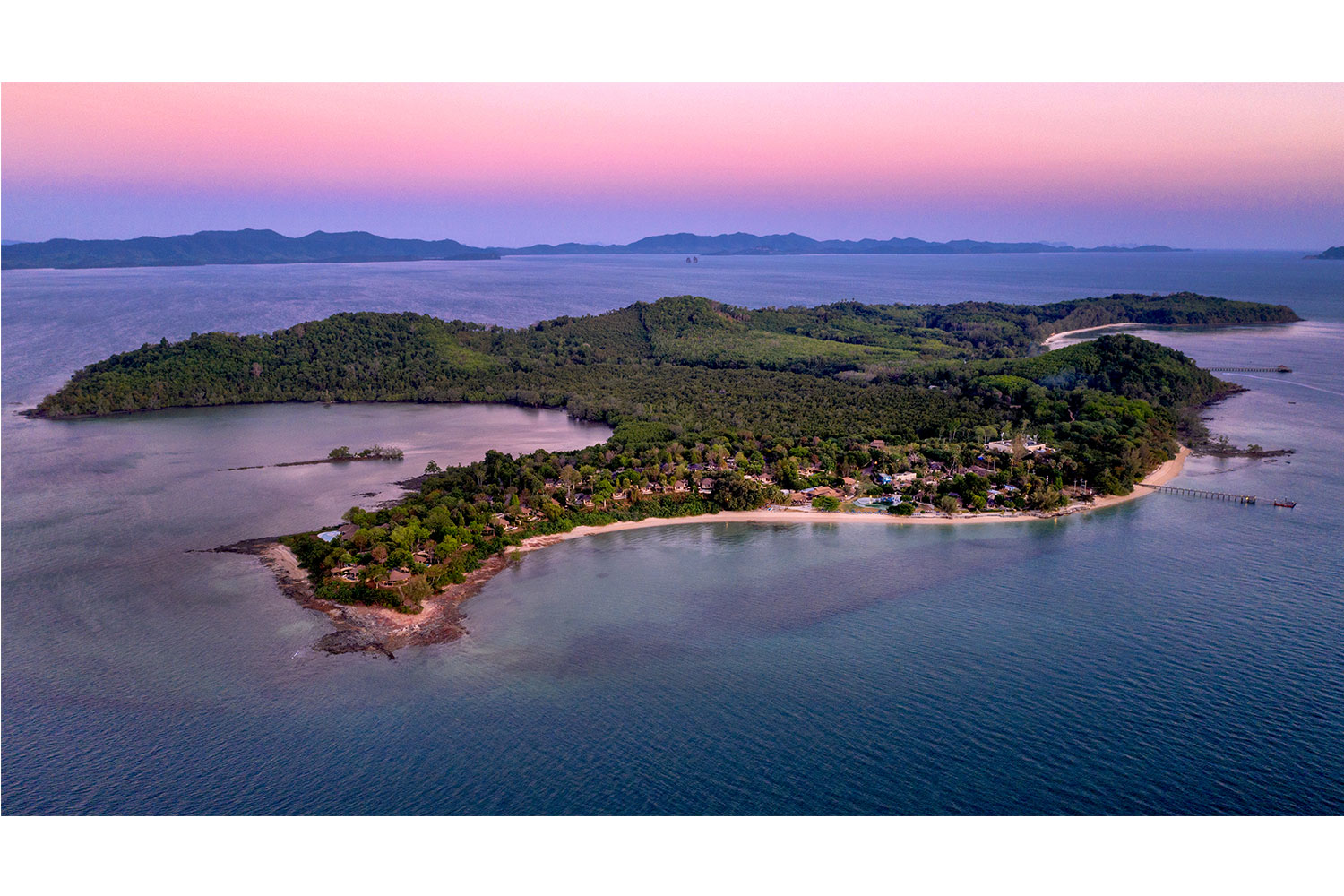
Its magical festive season offers for guests to join in the exciting festivities on the island this year-end, and make Christmas and New Year the most enjoyable. A wide range of dining and other celebrations will be on offer throughout Christmas and New Year, complemented by the resort’s idyllic ocean views, outstanding facilities and seamless services.
Christmas celebrations on the island
Featuring the Santa visit and the Christmas choir by his helpers, The Naka Island’s Christmas Eve celebrations begin with multiple celebrations across the resort’s restaurants and bar including all-day dining Tonsai restaurant, beachfront restaurant My Grill, scenic view Z Bar, the newly opened Rum Chapel and in-villa dining.
Tonsai – All day dining restaurant offers Christmas Eve Buffet Dinner priced at THB 3,200++ per person, featuring a wide array of local and international cuisine. (Food only)
Rum Chapel - New beachfront trendy dining venue with engaging ambiance and design presents its innovative 5-course Christmas set dinner priced at THB 4,500++ per person with welcome cocktail and wine pairing. In addition, guests can still enjoy a la carte dinner at the award-winning beachfront restaurant My Grill, Z Bar and in-villa dining, advanced reservation is required.

New Year’s Eve Dinner Party - Pirates of The Naka Island
On December 31, 2019, get ready to party in style with ‘Pirates of The Naka Island’ themed dinner party, and be entertained by live DJ, live band, talented dance shows and fire dance shows. A live DJ will also be playing everyone’s favorite hits all night long. Priced at THB 8,990++ per person including free flow beverages during 630 p.m. to 1 a.m., guests can start the year right and pamper with sumptuous buffet, drinks, entertainment plus a striking display of fireworks!
Guests can book the festive offers via the reservation desk available at Tonsai restaurant’s entrance during 8 a.m. to 9 p.m. from December 17, 2019 onwards. For more information, please call +66 76371400, email naka.reservations@luxurycollection.com or visit www.theluxurycollection.com/nakaisland
~Bangkok Post~
Its magical festive season offers for guests to join in the exciting festivities on the island this year-end, and make Christmas and New Year the most enjoyable. A wide range of dining and other celebrations will be on offer throughout Christmas and New Year, complemented by the resort’s idyllic ocean views, outstanding facilities and seamless services.
Christmas celebrations on the island
Featuring the Santa visit and the Christmas choir by his helpers, The Naka Island’s Christmas Eve celebrations begin with multiple celebrations across the resort’s restaurants and bar including all-day dining Tonsai restaurant, beachfront restaurant My Grill, scenic view Z Bar, the newly opened Rum Chapel and in-villa dining.
Tonsai – All day dining restaurant offers Christmas Eve Buffet Dinner priced at THB 3,200++ per person, featuring a wide array of local and international cuisine. (Food only)
Rum Chapel - New beachfront trendy dining venue with engaging ambiance and design presents its innovative 5-course Christmas set dinner priced at THB 4,500++ per person with welcome cocktail and wine pairing. In addition, guests can still enjoy a la carte dinner at the award-winning beachfront restaurant My Grill, Z Bar and in-villa dining, advanced reservation is required.
New Year’s Eve Dinner Party - Pirates of The Naka Island
On December 31, 2019, get ready to party in style with ‘Pirates of The Naka Island’ themed dinner party, and be entertained by live DJ, live band, talented dance shows and fire dance shows. A live DJ will also be playing everyone’s favorite hits all night long. Priced at THB 8,990++ per person including free flow beverages during 630 p.m. to 1 a.m., guests can start the year right and pamper with sumptuous buffet, drinks, entertainment plus a striking display of fireworks!
Guests can book the festive offers via the reservation desk available at Tonsai restaurant’s entrance during 8 a.m. to 9 p.m. from December 17, 2019 onwards. For more information, please call +66 76371400, email naka.reservations@luxurycollection.com or visit www.theluxurycollection.com/nakaisland
~Bangkok Post~
2018年1月12日星期五
A colourful and distinctive festival of umbrellas
A colourful and distinctive festival of umbrellas

Witness the beauty of Thai culture at the Bo Sang Umbrella and Sankampang Handicrafts Festival
The annual Bo Sang Umbrella and Sankampang Handicrafts Festival celebrates and recognises the community that creates Thailand’s most famous umbrellas handmade from saa, or mulberry bark, paper.
This year the event takes place from 19 to 21 January, 2018.Legend has it that a monk travelled to neighbouring Myanmar, where he came across unique umbrellas made from saa paper that offered protection against both the sun and rain.
He returned with the production technique and introduced the umbrella to the elders of Bo Sang village, who added their own artistic skills to create distinctive and colourful, but very practical, umbrellas.At first it was just a profitable hobby that supplemented the villagers’ earnings from the annual rice crop.
However, with time, production of the saa paper umbrellas prospered, prompting villagers to establish a handicraft cooperative in 1941 that now organises the annual Bo Sang Umbrella and Sankampaeng Handicrafts Festival.
To-date, Bo Sang umbrellas are made from three different materials, including saa paper, silk and cotton.During the three-day festival, streets are illuminated by lanterns, while hundreds of umbrellas are hung from the rafters and beams of houses and shops. Bands play, while villagers compete to design the year’s most attractive umbrella.
The ‘Bo Sang Beauty Pageant Bike Parade’ presents local ladies with an umbrella in one hand riding a bike with another. Concerts and a food festival compete for the attention of the audience, a mix of both tourists and residents, who gather to celebrate Bo Sang’s innovative handicraft skills.
~The Nation~

Witness the beauty of Thai culture at the Bo Sang Umbrella and Sankampang Handicrafts Festival
The annual Bo Sang Umbrella and Sankampang Handicrafts Festival celebrates and recognises the community that creates Thailand’s most famous umbrellas handmade from saa, or mulberry bark, paper.
This year the event takes place from 19 to 21 January, 2018.Legend has it that a monk travelled to neighbouring Myanmar, where he came across unique umbrellas made from saa paper that offered protection against both the sun and rain.
He returned with the production technique and introduced the umbrella to the elders of Bo Sang village, who added their own artistic skills to create distinctive and colourful, but very practical, umbrellas.At first it was just a profitable hobby that supplemented the villagers’ earnings from the annual rice crop.
However, with time, production of the saa paper umbrellas prospered, prompting villagers to establish a handicraft cooperative in 1941 that now organises the annual Bo Sang Umbrella and Sankampaeng Handicrafts Festival.
To-date, Bo Sang umbrellas are made from three different materials, including saa paper, silk and cotton.During the three-day festival, streets are illuminated by lanterns, while hundreds of umbrellas are hung from the rafters and beams of houses and shops. Bands play, while villagers compete to design the year’s most attractive umbrella.
The ‘Bo Sang Beauty Pageant Bike Parade’ presents local ladies with an umbrella in one hand riding a bike with another. Concerts and a food festival compete for the attention of the audience, a mix of both tourists and residents, who gather to celebrate Bo Sang’s innovative handicraft skills.
~The Nation~
2016年11月29日星期二
Ancient Thai city is protected but still crumbling
Ancient Thai city is protected but still crumbling
Sprawling urban growth and water management problems are threatening conservation efforts at Thailand’s ancient city of Ayutthaya, experts say.
The Unesco World Heritage site located some 80km north of the capital, Bangkok, was once among the world’s wealthiest cities and a major trading port from the 14th to 18th centuries.
Today, the city attracts tourists from around the world who come to admire the ruins and stone Buddha statues at Ayutthaya, once the ancient capital of Thailand, then known as Siam.
However, poor urban planning and its impact on water management in the low-lying area pose a threat to the historic park, said Montira Horayangura Unakul, National Professional Officer with Unesco’s Culture Unit.
“Half the island is protected as a historic park and is also a world heritage site and the eastern half is where a lot of the modern development has taken place,” Montira said in an interview.
Rapid development has fuelled concern over the area’s capacity to defend against floods.

A view shows the ruins of the ancient city of Ayutthaya.
Devastating floods in Thailand in 2011, which killed more than 900 people and cost billions of dollars, hit Ayutthaya. Dozens of temples were inundated for weeks, although most suffered little damage.
“Once the waters receded there didn’t seem to be too much damage,” said Montira.
“However, after that we found residual effects for example to mural paintings.”

The remains of a Buddha statue is seen in the ruins of the ancient city of Ayutthaya

A headless Buddha statue is seen in the ruins of the ancient city of Ayutthaya

Headless Buddha statues sit among the ruins of Ayutthaya.
A lack of knowledge about traditional materials used at some sites is another problem that besets Ayutthaya and other heritage sites, including the awe-inspiring Angkor Wat temple complex in neighbouring Cambodia.
“An issue we are trying to address now is knowing what the ancient materials used in Ayutthaya were and what the composition of them was,” Montira said.
Thailand held an international conference, in collaboration with Unesco, in October to discuss conservation of brick monuments at the site.
~News courtesy of Reuters~
Sprawling urban growth and water management problems are threatening conservation efforts at Thailand’s ancient city of Ayutthaya, experts say.
The Unesco World Heritage site located some 80km north of the capital, Bangkok, was once among the world’s wealthiest cities and a major trading port from the 14th to 18th centuries.
Today, the city attracts tourists from around the world who come to admire the ruins and stone Buddha statues at Ayutthaya, once the ancient capital of Thailand, then known as Siam.
However, poor urban planning and its impact on water management in the low-lying area pose a threat to the historic park, said Montira Horayangura Unakul, National Professional Officer with Unesco’s Culture Unit.
“Half the island is protected as a historic park and is also a world heritage site and the eastern half is where a lot of the modern development has taken place,” Montira said in an interview.
Rapid development has fuelled concern over the area’s capacity to defend against floods.
A view shows the ruins of the ancient city of Ayutthaya.
Devastating floods in Thailand in 2011, which killed more than 900 people and cost billions of dollars, hit Ayutthaya. Dozens of temples were inundated for weeks, although most suffered little damage.
“Once the waters receded there didn’t seem to be too much damage,” said Montira.
“However, after that we found residual effects for example to mural paintings.”
The remains of a Buddha statue is seen in the ruins of the ancient city of Ayutthaya
A headless Buddha statue is seen in the ruins of the ancient city of Ayutthaya
Headless Buddha statues sit among the ruins of Ayutthaya.
A lack of knowledge about traditional materials used at some sites is another problem that besets Ayutthaya and other heritage sites, including the awe-inspiring Angkor Wat temple complex in neighbouring Cambodia.
“An issue we are trying to address now is knowing what the ancient materials used in Ayutthaya were and what the composition of them was,” Montira said.
Thailand held an international conference, in collaboration with Unesco, in October to discuss conservation of brick monuments at the site.
~News courtesy of Reuters~
2016年5月15日星期日


2013年7月30日星期二
Oil-spill recovery will be tough: experts
Oil-spill recovery will be tough: experts

Academics have predicted a grim scenario for ecological systems hit by the oil spill in the Gulf of Thailand, including those around Koh Samet's Ao Phrao beach.
"It's going to be difficult to rehabilitate the affected areas," Phaithoon Mokkongpai of Burapha University said yesterday.
About 50 tonnes of crude oil leaked from an offshore pipeline on Saturday, spilling into the sea off Rayong.
In a bid to break up the oil slick, some chemicals have been used.
Phaithoon said he believed the use of chemicals was not appropriate because the oil-affected areas were not in the deep-sea zone, and these waters did not flow easily to the open sea.
There was a risk that oil droplets formed through the use of the chemicals would sink onto coral and kill them, he said, adding that ecological systems would then suffer because young aquatic animals and plankton usually live around the corals.
Phaithoon predicted disruption |to the food chain and believed |the impact would become evident soon.
"Although micro-organisms naturally consume oil, they won't be able to handle [such a] huge amount of oil," he explained.
He said that apart from damage to ecological systems, the oil spill would hurt tourism, the economy and coastal fisheries too.
"This is a big incident," he said, adding that the spill would not have posed such a serious threat if it had happened out at sea.
"But when [oil] reaches the coastal zone, the impacts are serious."
Pichai Sonchaeng, a former dean of Burapha University's Marine Technology Faculty, said the oil spill's impact on natural resources was worrying to everyone.
He urged all parties to quickly determine the exact leakage point, the exact amount of leaked oil and the affected areas, and to develop a model to assess the impacts.
"Then we will have to plan how to rehabilitate the environment and come up with the quickest and best way to do it," he said.
~News courtesy of The Nation~
Academics have predicted a grim scenario for ecological systems hit by the oil spill in the Gulf of Thailand, including those around Koh Samet's Ao Phrao beach.
"It's going to be difficult to rehabilitate the affected areas," Phaithoon Mokkongpai of Burapha University said yesterday.
About 50 tonnes of crude oil leaked from an offshore pipeline on Saturday, spilling into the sea off Rayong.
In a bid to break up the oil slick, some chemicals have been used.
Phaithoon said he believed the use of chemicals was not appropriate because the oil-affected areas were not in the deep-sea zone, and these waters did not flow easily to the open sea.
There was a risk that oil droplets formed through the use of the chemicals would sink onto coral and kill them, he said, adding that ecological systems would then suffer because young aquatic animals and plankton usually live around the corals.
Phaithoon predicted disruption |to the food chain and believed |the impact would become evident soon.
"Although micro-organisms naturally consume oil, they won't be able to handle [such a] huge amount of oil," he explained.
He said that apart from damage to ecological systems, the oil spill would hurt tourism, the economy and coastal fisheries too.
"This is a big incident," he said, adding that the spill would not have posed such a serious threat if it had happened out at sea.
"But when [oil] reaches the coastal zone, the impacts are serious."
Pichai Sonchaeng, a former dean of Burapha University's Marine Technology Faculty, said the oil spill's impact on natural resources was worrying to everyone.
He urged all parties to quickly determine the exact leakage point, the exact amount of leaked oil and the affected areas, and to develop a model to assess the impacts.
"Then we will have to plan how to rehabilitate the environment and come up with the quickest and best way to do it," he said.
~News courtesy of The Nation~
Samet to take a hit
Samet to take a hit

Island may miss tourism revenue goal after spill
The tourism industry in Koh Samet looks set to miss this year's revenue target of Bt20 billion because of the contamination and bad publicity from last weekend's oil spill, and the tourism minister and operators on the island are calling for PTT Global Chemical to compensate the hotels affected.
Meanwhile, commercial banks will provide assistance to hotel operators affected by the spill, and some banks see this as an opportunity to offer working capital to such businesses.
Tourism and Sports Minister Somsak Pureesrisak said yesterday that the Cabinet had agreed that PTTGC should compensate those hotels that have lost business due to guest cancellations.
He also assigned the Tourism Authority of Thailand (TAT) to examine the situation and estimate the cost.
Rayong Tourist Association chairman Chairat Trirattanajarasporn said that so far 15-20 per cent of advanced bookings had been cancelled by tourists from South Korea and Europe.
A preliminary estimate of the damage to the tourism sector is between Bt100 million and Bt200 million, but if the problem is not fully contained, that figure could reach Bt1 billion, Chairat said.
Last year, the island saw tourism revenue of Bt16 billion, and that had been expected to reach Bt20 billion this year. However, he is not confident that target can be reached now.
He called for PTTGC to tell operators when it can contain the oil leak and finish cleaning it up. The company as well should deliver a message with clear details to the public to restore tourists' confidence in the island.
Call to cooperate
He also called for all parties to integrate their efforts to restore the damaged environment.
Annually, more than 5.5 million tourists visit Samet.
"We really want to inform tourists that only Phrao Beach on the island was affected by the crude-oil spill, and on the rest of the island, they can still swim in the sea," Chairat said.
A taxi driver told The Nation many tourists were still staying on the island and were not frightened off by the event. Most of them are Chinese, followed by Westerners.
However, a business operator said the majority of tourists, mostly from Europe and China, had cancelled bookings for Koh Samet after the oil spill. Pisanu Kemaphan, president of the Rayong accommodation club, said tourists were not confident in the clean-up operations for the oil spill, which has been reported worldwide.
"This will cause long-term damage," he said, urging all relevant government agencies, particularly the TAT, and the media to present positive views of Samet. He noted that 95 per cent of tourist attractions on the island had remained safe from the spill, which had hit only a tiny part of the western shore.
According to Jiratchayuth Amyongka, head of SME (small and medium-sized enterprise) banking at Thanachart Bank, the oil spill has seriously hit tourism on Koh Samet even though some beaches were not damaged. The hotel business might take months to recover because advance bookings have been cancelled.
He noted that this was low season and operators spent this period renovating and expanding in preparation for the high season in October.
The damage might mean some hotel operators require more working capital, which might be a chance for TBank to offer credit lines to refinance customers.
In general, banks will consider the ability of customers affected by unexpected incidents to repay debt, and will offer basic assistance such as grace periods and credit lines to help them, he explained.
~News courtesy of The Nation~
Island may miss tourism revenue goal after spill
The tourism industry in Koh Samet looks set to miss this year's revenue target of Bt20 billion because of the contamination and bad publicity from last weekend's oil spill, and the tourism minister and operators on the island are calling for PTT Global Chemical to compensate the hotels affected.
Meanwhile, commercial banks will provide assistance to hotel operators affected by the spill, and some banks see this as an opportunity to offer working capital to such businesses.
Tourism and Sports Minister Somsak Pureesrisak said yesterday that the Cabinet had agreed that PTTGC should compensate those hotels that have lost business due to guest cancellations.
He also assigned the Tourism Authority of Thailand (TAT) to examine the situation and estimate the cost.
Rayong Tourist Association chairman Chairat Trirattanajarasporn said that so far 15-20 per cent of advanced bookings had been cancelled by tourists from South Korea and Europe.
A preliminary estimate of the damage to the tourism sector is between Bt100 million and Bt200 million, but if the problem is not fully contained, that figure could reach Bt1 billion, Chairat said.
Last year, the island saw tourism revenue of Bt16 billion, and that had been expected to reach Bt20 billion this year. However, he is not confident that target can be reached now.
He called for PTTGC to tell operators when it can contain the oil leak and finish cleaning it up. The company as well should deliver a message with clear details to the public to restore tourists' confidence in the island.
Call to cooperate
He also called for all parties to integrate their efforts to restore the damaged environment.
Annually, more than 5.5 million tourists visit Samet.
"We really want to inform tourists that only Phrao Beach on the island was affected by the crude-oil spill, and on the rest of the island, they can still swim in the sea," Chairat said.
A taxi driver told The Nation many tourists were still staying on the island and were not frightened off by the event. Most of them are Chinese, followed by Westerners.
However, a business operator said the majority of tourists, mostly from Europe and China, had cancelled bookings for Koh Samet after the oil spill. Pisanu Kemaphan, president of the Rayong accommodation club, said tourists were not confident in the clean-up operations for the oil spill, which has been reported worldwide.
"This will cause long-term damage," he said, urging all relevant government agencies, particularly the TAT, and the media to present positive views of Samet. He noted that 95 per cent of tourist attractions on the island had remained safe from the spill, which had hit only a tiny part of the western shore.
According to Jiratchayuth Amyongka, head of SME (small and medium-sized enterprise) banking at Thanachart Bank, the oil spill has seriously hit tourism on Koh Samet even though some beaches were not damaged. The hotel business might take months to recover because advance bookings have been cancelled.
He noted that this was low season and operators spent this period renovating and expanding in preparation for the high season in October.
The damage might mean some hotel operators require more working capital, which might be a chance for TBank to offer credit lines to refinance customers.
In general, banks will consider the ability of customers affected by unexpected incidents to repay debt, and will offer basic assistance such as grace periods and credit lines to help them, he explained.
~News courtesy of The Nation~
2013年7月12日星期五
Coral reefs in severe state of degradation
Coral reefs in severe state of degradation
Coral reefs at a popular marine national park, which covers the famous Phi Phi Island, have reached a severe level of degradation due to bleaching, a survey revealed.

"Bleaching has affected up to 70 per cent of the coral reefs around Hat Noppharat Thara-Mu Ko Phi Phi National Park. Of the affected corals, 47.52 per cent have died," a senior government official disclosed at an academic seminar yesterday.
Songtam Suksawang, who heads the National Parks and Protected Area Innovation Institute, described the situation as "worrying".
His institute conducted the survey between 2009 and 2013 across seven marine national parks and works under the Department of National Parks, Wildlife and Plant Conservation (DNP), which hosted the seminar.
The state of the coral reefs at Mu Koh Lanta National Park is even worse, with up to 80 per cent of them in a bad state. "Now, only 17 per cent of the corals are alive," Songtam said.
The survey also revealed that the size of living corals along Mu Koh Surin National Park had shrunk by 70 to 90 per cent, while those along Mu Koh Similan National Park had shrunk by about 40 to 50 per cent.
At the Moo Koh Chumphon National Park, about 70 to 80 per cent of the staghorn coral that were seeded as an experiment have also died from bleaching.
Coral bleaching emerged as a serious threat to Thailand's marine resources around 2010 and 2011, prompting the DNP to shut down at least 10 diving sites to prevent further damage.
Songtam said there were signs that reefs in previously shut down diving spots such as Hin Klang at Hat Noppharat Thara - Mu Ko Phi Phi National Park had recovered satisfactorily.
"Now, we plan to propose that the number of tourists is limited at each spot," he said.
He also suggested that clear diving tracks be built to ensure that divers do not get too close to the coral reefs and cause damage.
Meanwhile, DNP chief Manopas Hua-mueangkaeo said the number of visitors to national parks had risen by 8.2 per cent last year, and this year, the DNP plans to open marine national parks to tourists from October 15.
~News courtesy of The Nation~
Coral reefs at a popular marine national park, which covers the famous Phi Phi Island, have reached a severe level of degradation due to bleaching, a survey revealed.
"Bleaching has affected up to 70 per cent of the coral reefs around Hat Noppharat Thara-Mu Ko Phi Phi National Park. Of the affected corals, 47.52 per cent have died," a senior government official disclosed at an academic seminar yesterday.
Songtam Suksawang, who heads the National Parks and Protected Area Innovation Institute, described the situation as "worrying".
His institute conducted the survey between 2009 and 2013 across seven marine national parks and works under the Department of National Parks, Wildlife and Plant Conservation (DNP), which hosted the seminar.
The state of the coral reefs at Mu Koh Lanta National Park is even worse, with up to 80 per cent of them in a bad state. "Now, only 17 per cent of the corals are alive," Songtam said.
The survey also revealed that the size of living corals along Mu Koh Surin National Park had shrunk by 70 to 90 per cent, while those along Mu Koh Similan National Park had shrunk by about 40 to 50 per cent.
At the Moo Koh Chumphon National Park, about 70 to 80 per cent of the staghorn coral that were seeded as an experiment have also died from bleaching.
Coral bleaching emerged as a serious threat to Thailand's marine resources around 2010 and 2011, prompting the DNP to shut down at least 10 diving sites to prevent further damage.
Songtam said there were signs that reefs in previously shut down diving spots such as Hin Klang at Hat Noppharat Thara - Mu Ko Phi Phi National Park had recovered satisfactorily.
"Now, we plan to propose that the number of tourists is limited at each spot," he said.
He also suggested that clear diving tracks be built to ensure that divers do not get too close to the coral reefs and cause damage.
Meanwhile, DNP chief Manopas Hua-mueangkaeo said the number of visitors to national parks had risen by 8.2 per cent last year, and this year, the DNP plans to open marine national parks to tourists from October 15.
~News courtesy of The Nation~
2013年6月17日星期一
2012年2月6日星期一
Pattaya officials talk green to draw in tourists
Pattaya officials talk green to draw in tourists
An ambitious 10-year plan to make the seaside resort a world class "greenovative tourism city" has been launched by local authorities at a cost of 646.7 million baht.
The money, now being sought from the central government, will fund 34 projects under a development master plan, Mayor Ittipol Khunploem said yesterday.
Mr Ittipol said the projects will come under a scheme called "Designated Areas for Sustainable Tourism Administration [Dasta]" and will cover other local adminstrations.
Of the 34 projects, 13 worth 253.7 million baht will cover Pattaya city with the remainder costing 393 million baht involving development projects in nearby areas.
Mr Ittipol said the plan, which runs from 2012 to 2022, envisages Pattaya as a world class "greenovative tourism city".
Last year the cabinet agreed to set aside 15 billion baht to help with the city's plans which seek to improve public transport services and utilities, develop new tourism destinations and amend laws relating to zoning of entertainment venues.
Dasta director Nalikatibhag Sangsnit said the thinking behind the plan is to ensure the city can cope with tourism growth in the next 10 years.
Projections for Pattaya envisage the number of foreign and Thai tourists doubling in the next decade, while tourism revenue is estimated to rise from 68 billion baht to 300 billion baht a year.
Col Nalikatibhag said the cabinet had resolved to turn Pattaya city into a special zone for sustainable tourism.
The plan covers 928.47 square kilometres of Pattaya city and eight other areas: the municipalities of Nong Prue, Bang Lamung, Takhian Tia, Pong, Huay Yai and Na Jom Thian, plus tambon Nong Pla Lai and tambon Khao Mai Kaew.
~News courtesy of Bangkok Post~
An ambitious 10-year plan to make the seaside resort a world class "greenovative tourism city" has been launched by local authorities at a cost of 646.7 million baht.
The money, now being sought from the central government, will fund 34 projects under a development master plan, Mayor Ittipol Khunploem said yesterday.
Mr Ittipol said the projects will come under a scheme called "Designated Areas for Sustainable Tourism Administration [Dasta]" and will cover other local adminstrations.
Of the 34 projects, 13 worth 253.7 million baht will cover Pattaya city with the remainder costing 393 million baht involving development projects in nearby areas.
Mr Ittipol said the plan, which runs from 2012 to 2022, envisages Pattaya as a world class "greenovative tourism city".
Last year the cabinet agreed to set aside 15 billion baht to help with the city's plans which seek to improve public transport services and utilities, develop new tourism destinations and amend laws relating to zoning of entertainment venues.
Dasta director Nalikatibhag Sangsnit said the thinking behind the plan is to ensure the city can cope with tourism growth in the next 10 years.
Projections for Pattaya envisage the number of foreign and Thai tourists doubling in the next decade, while tourism revenue is estimated to rise from 68 billion baht to 300 billion baht a year.
Col Nalikatibhag said the cabinet had resolved to turn Pattaya city into a special zone for sustainable tourism.
The plan covers 928.47 square kilometres of Pattaya city and eight other areas: the municipalities of Nong Prue, Bang Lamung, Takhian Tia, Pong, Huay Yai and Na Jom Thian, plus tambon Nong Pla Lai and tambon Khao Mai Kaew.
~News courtesy of Bangkok Post~
2011年6月29日星期三


2011年6月22日星期三



2011年6月20日星期一


Khon Kaen to Vientiane Transport

Bus from Khon Kaen to Vientiane
泰国孔敬往寮国永珍巴士(公车)
745am and 315pm daily 每天
180 THB
订阅:
博文 (Atom)